
Last updated November 15, 2026
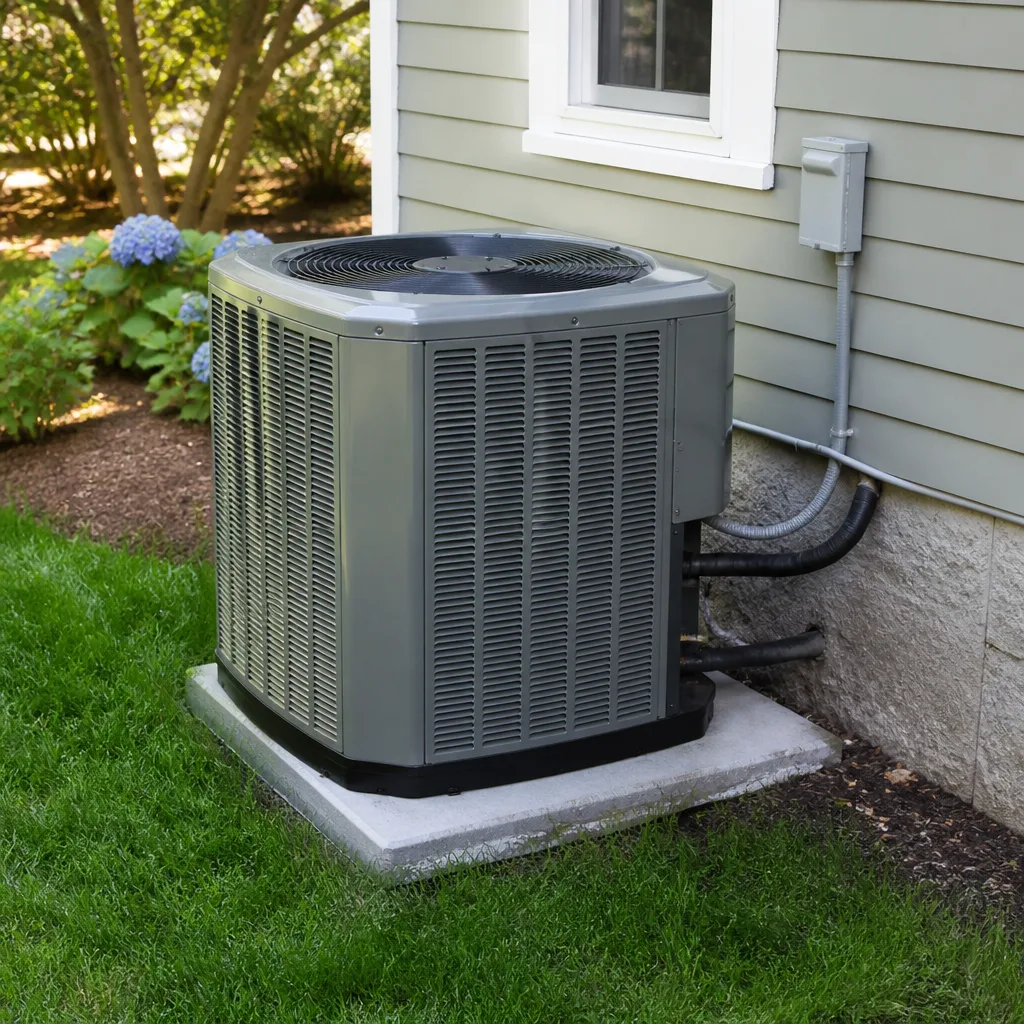 AC repair
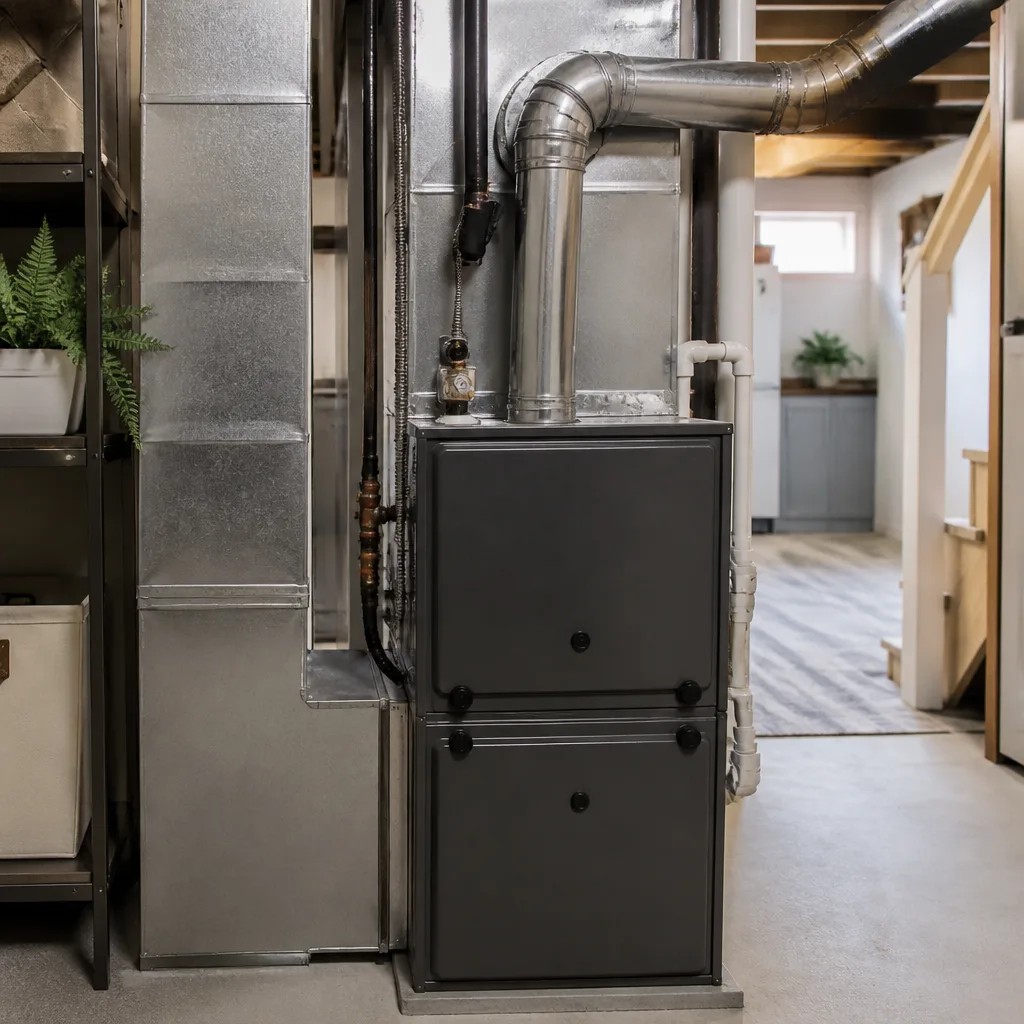 Furnace & heating
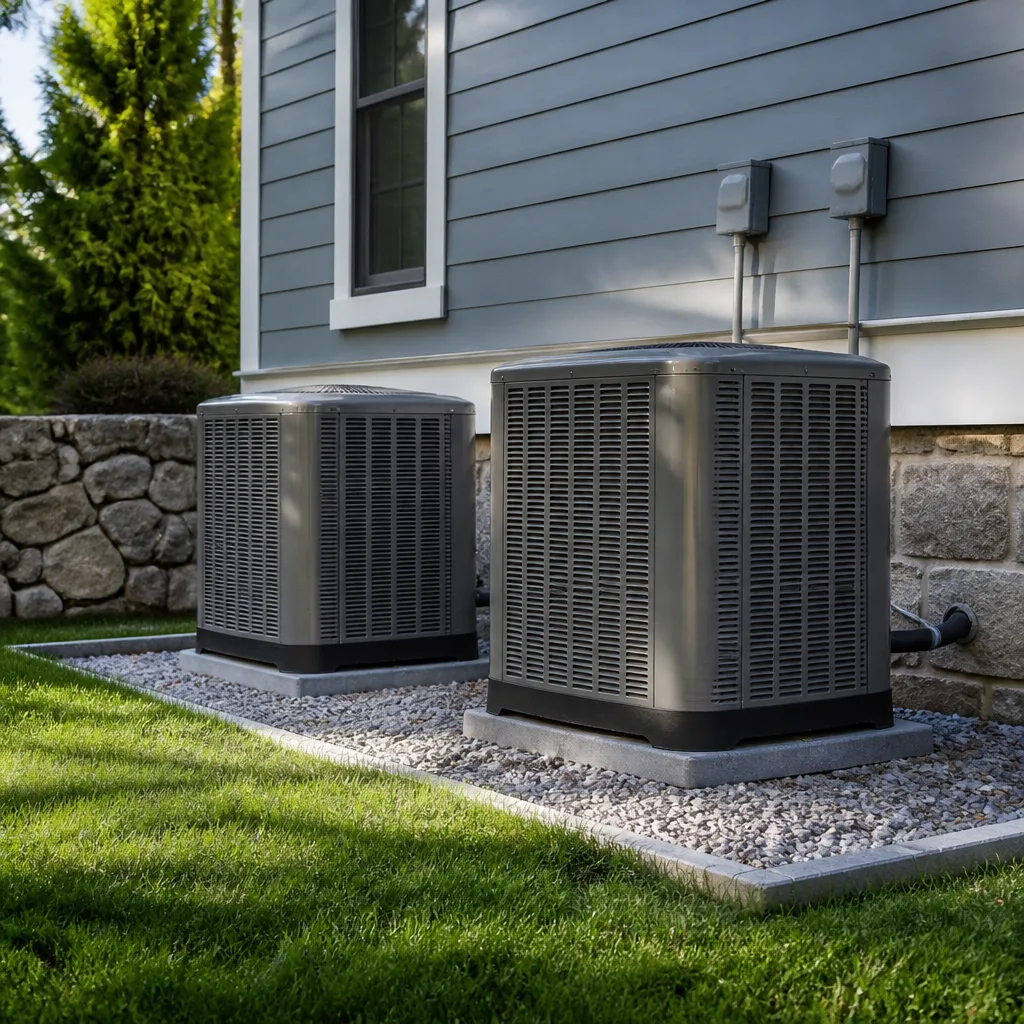 Heat pumps
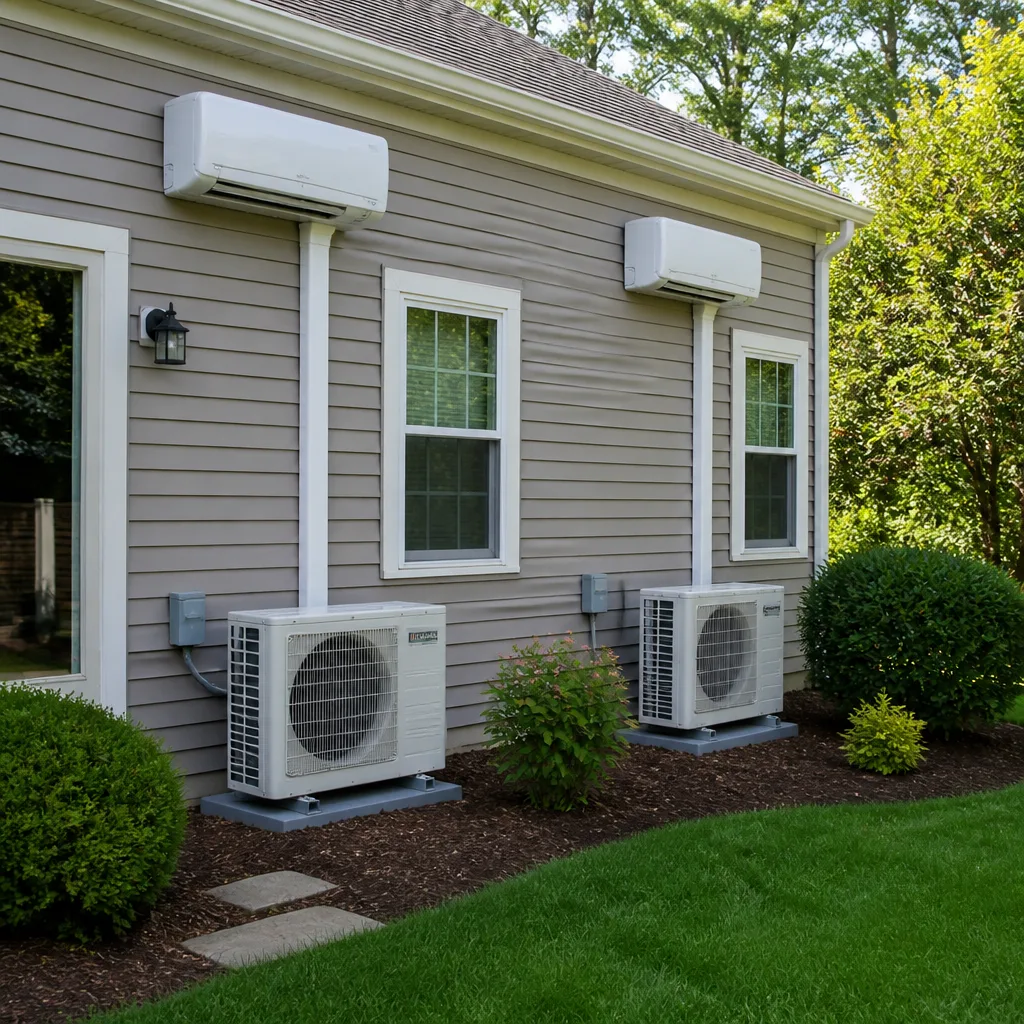 Ductless mini splits
 Carrier
 Trane
 Goodman
Seasonal tune-up and full diagnostic on your Carrier, Trane, or Goodman system - readings shown to you before any repair is proposed
Diagnosis first, numbers second - you approve the repair price before a single part goes in.
Get your free estimateHVAC Emergency Preparedness Guide for Pompano Beach Homes
The phone calls that jam every HVAC line in Pompano Beach after a named storm almost never come from homes with real storm damage. They come from homes whose systems were already limping – a weak capacitor, a dirty condenser coil, a refrigerant charge that had been drifting low for a season – and the storm just pushed them over the edge at the worst possible moment. When a hurricane forces contractors to triage two-week backlogs within 48 hours, the homeowner whose system was already struggling is the one waiting longest. The work you do before a heat wave, before a storm makes landfall, and before the first cool front of winter decides whether you’re making a calm call or a panicked one. This guide walks you through the preparation that actually matters in Pompano Beach: a pre-storm checklist, a post-storm restart protocol that protects your compressor, a heat-safety plan for when the AC is down, and the files every homeowner should have ready before anything goes wrong.
Quick Answer
HVAC emergency preparedness in Pompano Beach means three things: maintaining your system so it can survive a stress event, knowing exactly what to do with your outdoor unit before a named storm and after power is restored, and having a plan for keeping your household safe in a hot, humid house while you wait for service. The right preparation turns a two-week disaster into a two-hour inconvenience. It also costs almost nothing – most of the work is documentation, a few minutes of physical preparation, and one honest maintenance check per year.
Styles & brands we work with
- AC repair
- Furnace & heating
- Heat pumps
- Ductless mini splits
- Carrier
- Trane
- Goodman
Table of Contents
- Why HVAC emergencies cluster around predictable events in Pompano Beach
- Pre-storm HVAC checklist for Pompano Beach homeowners
- Post-storm restart protocol: why you don’t turn the system on immediately
- How to manage heat safely during an AC failure
- What to have ready before you call a contractor
- Building your HVAC emergency file
- The seasonal preparation calendar that prevents emergencies
- Warranty documentation and storm damage records
Why HVAC emergencies cluster around predictable events in Pompano Beach
HVAC breakdowns follow a pattern in South Florida, and it’s a pattern you can plan around. The first sustained heat wave of the summer, the 48 hours after a named storm, and holiday weekends when every technician in Broward is already booked – those are the three windows when a failing system turns into a genuine crisis. The reason is simple: those are the moments when every failing system gets pushed hard. A unit that’s been coasting on a weak part all spring suddenly gets asked to run flat-out for 12 hours a day. The part gives out. So does the neighbor’s. So does the neighbor’s neighbor’s.
In a city where summer heat index routinely pushes past 100 degrees, a cooling failure during a heat wave stops being an inconvenience after a few hours. Indoor temperatures in a Pompano Beach home without working AC can climb into the high 80s by mid-afternoon, and humidity climbs with them. The home becomes uncomfortable fast, then unsafe for vulnerable household members, then a medical concern. We’ve seen every version of this call, and the ones that go smoothly are almost always from homeowners who had done some preparation.
The good news is that the events are predictable. The first heat wave happens every year, usually between May and June. Hurricane season runs June through November, with the statistical peak in September. Holiday weekends are on the calendar forever. If you prepare once for each of these windows, you’re ahead of the vast majority of the market – and well ahead of the person calling at 3pm on a holiday because the cooling stopped and every contractor in Pompano Beach is already booked.
The preparation isn’t complicated. It’s a mix of keeping the system healthy so it can survive the stress, knowing what to do physically with the equipment before and after events, and having your own information organized so that when you do need to call, you’re the fast customer getting the fast response. That’s what the rest of this guide walks through.
Pre-storm HVAC checklist for Pompano Beach homeowners
Before a named storm makes landfall, your HVAC equipment needs about 20 minutes of attention. Most of it is physical protection for the outdoor unit and documentation of its condition before the storm so that any damage claim is clean. Here’s the checklist we walk homeowners through:
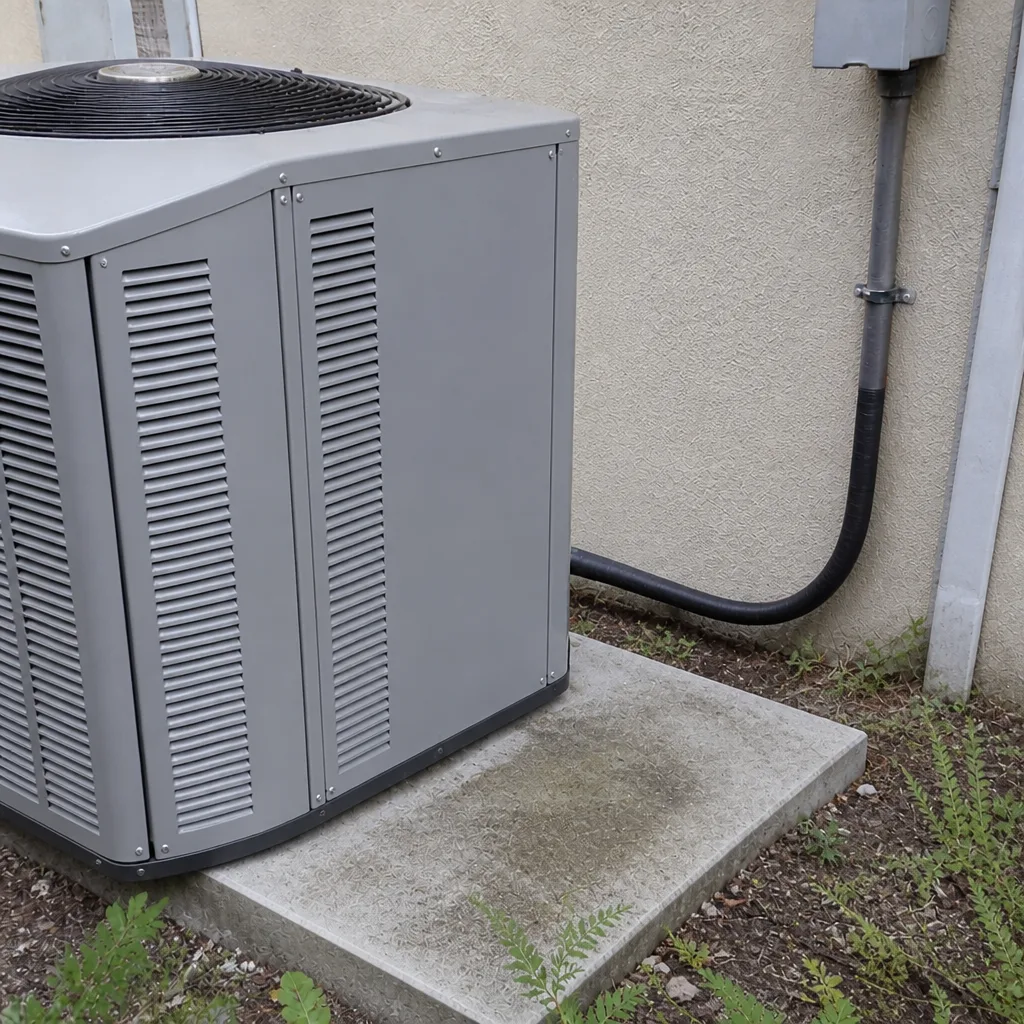
- Photograph the outdoor unit from all four sides. Before you do anything else, take clear photos of the condenser unit’s exterior, the refrigerant line insulation, the electrical disconnect box, and the pad it sits on. Date-stamp them. If you do file an insurance or warranty claim, those photos prove condition before the storm.
- Record the model and serial numbers while you can still read them. The rating plate is on the side of the outdoor unit. Photograph it. Also photograph the air handler’s rating plate (usually in the indoor unit, attic, or closet). If the unit is damaged, those plates may not be readable afterward.
- Do NOT cover the outdoor unit. A common mistake after storms is strapping a tarp or board over the condenser to “protect” it. This traps windblown debris and can turn the unit into a sail. HVAC manufacturers design outdoor units to survive wind-driven rain; they do not design them to survive being wrapped and lifted by gusts. Leave it uncovered unless a manufacturer instruction specifically says otherwise.
- Secure loose items near the unit. Patio furniture, garden pots, sandbags, and anything else that could become wind-driven debris should be moved away from the condenser. Impact damage is the most common storm-related cause of condenser replacement.
- Turn the thermostat off before the storm. Shut the system down completely before landfall. This avoids a situation where power flickers back and the compressor tries to start on a surge.
- Check your surge protection. Whole-home surge protection, if you have it, does more for your HVAC than any other single device. If you don’t have it, a licensed electrician can install one – but that’s not the kind of thing to add 12 hours before a storm.
- Know where your AC disconnect switch is. It’s usually a box mounted on the exterior wall near the condenser. Label it if it isn’t labeled. In an emergency, you want to be able to kill power to the unit in seconds.
- Set your phone to notify you of power restoration. If the neighborhood watch or utility app alerts you to power coming back, you’ll know when to run your post-storm restart check (see the next section).
Manufacturer warranty terms generally cover defects in materials and workmanship, not storm damage – which is why the documentation step matters so much. Manufacturers like Lennox and Goodman, among the brands we service for Pompano Beach homeowners, typically require proof of pre-storm condition before authorizing any replacement under a defect claim after an event. Your insurance company will require the same. The 5 minutes it takes to photograph and record the equipment is the difference between a smooth claim and a disputed one. If you do see actual damage after the storm, don’t attempt repairs yourself – document it and call for AC repair once it’s safe.
Post-storm restart protocol: why you don’t turn the system on immediately
When the power comes back after a storm, the first instinct is to walk to the thermostat and hit cool. Don’t – at least not until you’ve checked a few things. Here’s why: after a storm, power can be unstable for hours. Utilities energize circuits in stages, and a brief re-close that sends a surge through your HVAC can wreck the compressor in a single start. The compressor is the single most expensive part in your system. The check costs five minutes; a compressor does not.
Here’s the restart protocol we recommend for Pompano Beach homeowners:
- Confirm the power is stable in the rest of the house. Lights should stay on steadily. If anything is still flickering or brownout-level, wait.
- Inspect the outdoor unit from a safe distance. Look for debris on or against the coil, standing water in or around the pad, visibly damaged refrigerant lines, or anything that looks like a shifted unit. If the unit looks compromised, do not power it on. Call for AC repair.
- Check the interior air handler. If it’s in the attic or a closet, look for water intrusion or obvious leaks around it. A wet air handler plus power equals a real shock hazard.
- Turn the thermostat off, then to fan-only for a couple of minutes. This clears the ducts and confirms the air handler is moving air without asking the compressor to start.
- Then switch to cool. Give the system 20-30 minutes to settle. If it starts and runs smoothly, you’re done. If it trips the breaker, hums without starting, or blows warm air, turn it off and call for service.
- Listen for the compressor. A healthy compressor has a smooth start; a struggling one hums, chatters, or kicks in and out. Any of those is a stop-and-call signal.
Post-storm surge is one of the most common causes of compressor death in South Florida. If you have any suspicion at all, the safest move is to leave the system off and get a proper diagnostic. We work on the system you have – whether that’s a Rheem, York, or any of the nine major brands – so we’re diagnosing the actual equipment, not pitching you something new. Call Valor AC Repair before you restart anything you’re unsure about.
How to manage heat safely during an AC failure
A failed AC during a Pompano Beach summer is a house-heat problem, not just a comfort problem. The heat index – what the temperature actually feels like with humidity factored in – is the number that matters, because indoor humidity in a home with no working cooling climbs fast. A 92-degree indoor temperature with 70% humidity is a heat index near 115. That’s the range where the human body stops being able to regulate itself efficiently through sweat, and it’s when medical risk escalates.
Here’s how to prioritize and stay safe while waiting for service:
- Prioritize one room, not the whole house. Close doors to unused rooms. Pick the coolest room – usually the lowest floor, no west-facing windows, shade outside – and make it the household’s cold room. Portable fans there do more good than scattered through the house.
- Use cross-ventilation at night only. Opening windows works after sunset when outdoor humidity dips. During the day, open windows let in humid, hot air and make the heat index worse.
- Manipulate humidity deliberately. Take cool showers (not hot) and don’t run appliances that put moisture in the air – no boiling water, no long dishwasher cycles, no indoor laundry drying. Lower humidity translates directly to a lower felt heat index.
- Watch for warning signs in vulnerable household members. Infants, older adults, and anyone with cardiac or respiratory conditions are the highest risk. Signs of heat exhaustion include heavy sweating, weakness, dizziness, nausea, and headache. Signs of heat stroke include confusion, hot skin, and no sweating. Heat stroke is a medical emergency – call 911, don’t wait on the AC.
- Hydrate on a schedule. Drink water throughout the day rather than waiting for thirst. Avoid alcohol and heavy caffeine, which both work against you in a hot house.
- Know when to leave. If the indoor temperature stays above roughly 90 degrees and no service is available, plan to move vulnerable household members to a cooled environment – a friend’s house, a hotel, or a cooling center – until service arrives.
In our experience, most homeowners wait too long to act on the heat-safety side. If you’re calling after the sun goes down because the house is unbearable, the call could have happened that morning. Emergency AC repair in Pompano Beach is easier to schedule quickly when you start the conversation early, not when you’re already in discomfort.
What to have ready before you call a contractor
The fastest diagnostic call is a short one. The slowest call bounces back and forth over text and voicemail because the homeowner can’t find the model number or doesn’t know when the problem started. The difference between those two calls is a two-minute prep. Here’s what to have ready before you dial:
- Model and serial numbers of both the outdoor unit and the indoor air handler. These are on the rating plate (outdoor unit’s side, air handler’s cabinet or closet door). If you can read them at all, you have the two most valuable pieces of information.
- Symptom timeline. When did you first notice the problem? Was it sudden or gradual? Is it intermittent or constant? Does it happen on startup, after running for a while, or all the time? Exact timeline saves diagnostic time.
- Thermostat settings and reading. What’s set (cool, heat, fan-only, auto), what’s the target temperature, and what temperature is the room actually reading? If the display is blank or showing an error code, note that too.
- What the system is doing when it fails. Does the outdoor fan run? Does the compressor hum or click? Does the indoor unit blow air at all? Is the air cold, warm, or room-temperature?
- Breaker status and any recent electrical events. Has the breaker tripped? Has the power flickered? Was there a recent storm? All of these shape the diagnosis before the technician ever arrives.
- Any error codes on the thermostat or control board. Photograph the display before it clears.
- Your service history and warranty status. Who installed the system, when, and is it under a manufacturer warranty? Older equipment under warranty may still be covered for specific parts. Knowing that informs the repair-or-replace conversation.
- Phone number and address details. Obvious, but worth having ready, especially if the call is going to someone in the household.
The goal is a diagnostic conversation that takes 3 minutes, not a 30-minute callback loop. With model numbers, a symptom timeline, and a thermostat photo in hand, our technicians can often show up already knowing what they’re likely walking into. That’s what fast dispatch actually looks like in practice.
Building your HVAC emergency file
The single most useful thing any Pompano Beach homeowner can do to be prepared is assemble a small HVAC file – physical or digital – before they need it. When the system fails during a heat wave, the last thing you want is to be searching for the installation paperwork while the house climbs toward 90 degrees. The file should have, at minimum:
- Installation and service records. Who installed the system and when. Every service call and what was done. You can request this from your last contractor if you don’t have it.
- Warranty documents. The manufacturer’s warranty (installation date, parts covered, duration) and any installer workmanship warranty. These are the documents that matter when a part fails and you want covered replacement.
- Permit records. Pompano Beach, like most Florida cities, requires permits for HVAC replacement. Keep the permit number and the final inspection record on file. When you sell your house, that history matters. When you file an insurance claim, that history matters.
- Model and serial numbers for both indoor and outdoor units. Duplicate them here even if they’re photographed elsewhere.
- Filter size and type. Write down the exact filter dimensions and the MERV rating the manufacturer recommends. Having this on hand when you’re standing in an aisle at a home center beats trying to read the old filter.
- Two contractor contacts. Yours and one backup. The backup matters because a contractor mid-emergency may have to triage. If the first isn’t available, you’re still calling a trained, licensed professional – not scrolling through search results while the house is hot.
- Insurance policy information. Just the policy number and the insurer’s claims line. You won’t need it for a minor repair, but after a storm it’s often the first document requested.
- Prefilled symptom log template. A tiny form with a few fields – date, symptom, thermostat reading, breaker status, code shown – that you can fill out in 30 seconds when something fails. The log becomes the diagnostic history.
We’ve seen the difference a file makes. A homeowner who can read their system’s model number and describe the exact timeline gets their problem diagnosed faster than one who needs three callbacks to locate the install paperwork. Keep the file on your phone (photos in a dedicated album) and a paper copy in a kitchen drawer. Redundant storage matters more than perfect storage.
If you’re looking at this for the first time and you’re in Pompano Beach, this is worth doing on a quiet weekend. Then update it once a year. The file takes 20 minutes to assemble and saves hours of chaos later – and in a real emergency, it’s the difference between a smooth call and a slow one.
The seasonal preparation calendar that prevents emergencies
Most HVAC emergencies in South Florida are the result of a component that was failing slowly and got pushed over the edge by a stress event. The season-by-season routine below is what actually prevents that from happening:
- Late winter (February-March): Replace the filter, clear any debris around the outdoor unit, and listen to the unit for any new sounds the first time you run it in cooling mode. A brief spring check catches most small issues before the first real heat.
- Spring (April-May): The single most important maintenance window of the year, because it’s before the first heat wave. Schedule a full diagnostic that includes refrigerant charge, electrical connections, capacitor health, and a coil inspection. This is where you find the weak part before it fails in June.
- Summer (June-September): The high-stress season. Change filters monthly (not every 90 days) during peak use. Watch for rising energy bills as an early signal that something’s drifting. If you hear a new noise, don’t wait for it to get worse.
- Pre-storm (anytime a named storm targets Florida): Follow the pre-storm checklist earlier in this guide. Photograph, document, secure, shut down the thermostat.
- Post-storm (after power restoration): Follow the restart protocol. Confirm stable power, inspect, then fan-only, then cool.
- Fall (October-November): Before the first cool front, if you have a heat pump or electric heat strips, run a heating test cycle to make sure the heat works before you actually need it. Heating failures in Pompano Beach are rare and always surprising.
- Once per year: Update your emergency file. Confirm the model numbers, warranty status, and contractor contacts. This takes 15 minutes and keeps you ready.
That pattern is the difference between “the system failed in June and we had no warning” and “the shop found a weak capacitor in April, replaced it, and we never thought about it again.” Maintenance isn’t glamorous, but it’s the single most effective emergency-prevention tool in the industry.
Warranty documentation and storm damage records
Warranty documentation does two jobs at once. It backs up a legitimate part failure for repair or replacement, and it creates a factual record that helps you sort actual defect from storm-caused damage when an insurance claim is in play. Both jobs require the same core documents, which is why the file you assemble for one purpose serves the other.
Here’s what to keep current:
- Original installation invoice showing the date of installation, model numbers, and the installing contractor. Manufacturer warranties usually run from the installation date, and you’ll need to prove that date if a part fails.
- Manufacturer warranty card or registration confirmation. Many warranties require registration within a window after install. If you don’t have it, the installing contractor or the manufacturer’s customer service can usually confirm registration status by model and serial number.
- Pre-storm documentation. The photos and rating plate images from the pre-storm checklist. These prove system condition before a named event, which is what insurers and manufacturers need to distinguish storm damage from a pre-existing condition.
- Post-storm documentation. If a system is damaged in a storm, photograph everything before you touch anything. Any attempt to start or repair a damaged unit can blur the record and complicate the claim.
- Service records. Every maintenance visit and repair. Regular maintenance history strengthens warranty claims and can strengthen insurance claims – it shows the system was being maintained, not neglected.
A manufacturer like Rheem, York, or the other brands we service typically wants clean documentation before authorizing a claim. When a customer comes to us after a storm with a clear pre-storm photo, a clean service record, and the proper paperwork, the process is straightforward. When they come in without documentation, it becomes a negotiation. Do the paperwork on the front end, and it’s a five-minute task instead of a five-week one.
Common Mistakes to Avoid
- Wrapping the outdoor unit with a tarp before a storm. This is the most common pre-storm HVAC mistake. Outdoor units are designed to shed wind-driven rain; wrapping them traps debris and creates wind load that can damage the unit.
- Flipping the breaker and thermostat on the second the power comes back. Post-storm power is often unstable for hours. Restarting the compressor during a brownout is one of the most reliable ways to damage it. Follow the restart protocol.
- Running the system after a known surge without checking for damage. Visible signs of surge damage include a tripped breaker, a burning smell, a humming compressor that won’t start, or a thermostat with no display. Any of these means: turn it off and call for service.
- Waiting until the first heat wave to schedule maintenance. The busiest two weeks of the year for every HVAC contractor in Pompano Beach are the first two weeks of sustained heat. Schedule your maintenance in April so you’re on the calendar before the rush, not waitlisted in it.
- Skipping the pre-storm photos. The 5 minutes of photographing the outdoor unit’s condition before landfall can save weeks of back-and-forth after a claim. Without those photos, the manufacturer and the insurer have to take your word for pre-storm condition.
- Not knowing where your outdoor disconnect switch is. In an emergency, seconds matter. Label the disconnect box. Show every adult in the household where it is. This is basic safety and takes 30 seconds.
- Calling a contractor without model numbers and a symptom timeline ready. The diagnostic call runs twice as long and often requires a callback. Have the information ready before you dial, and the entire interaction speeds up.
- Letting filters go 90 days during peak summer. In Pompano Beach’s summer, filters load up faster than the manufacturer’s typical interval. Check monthly during June through September.
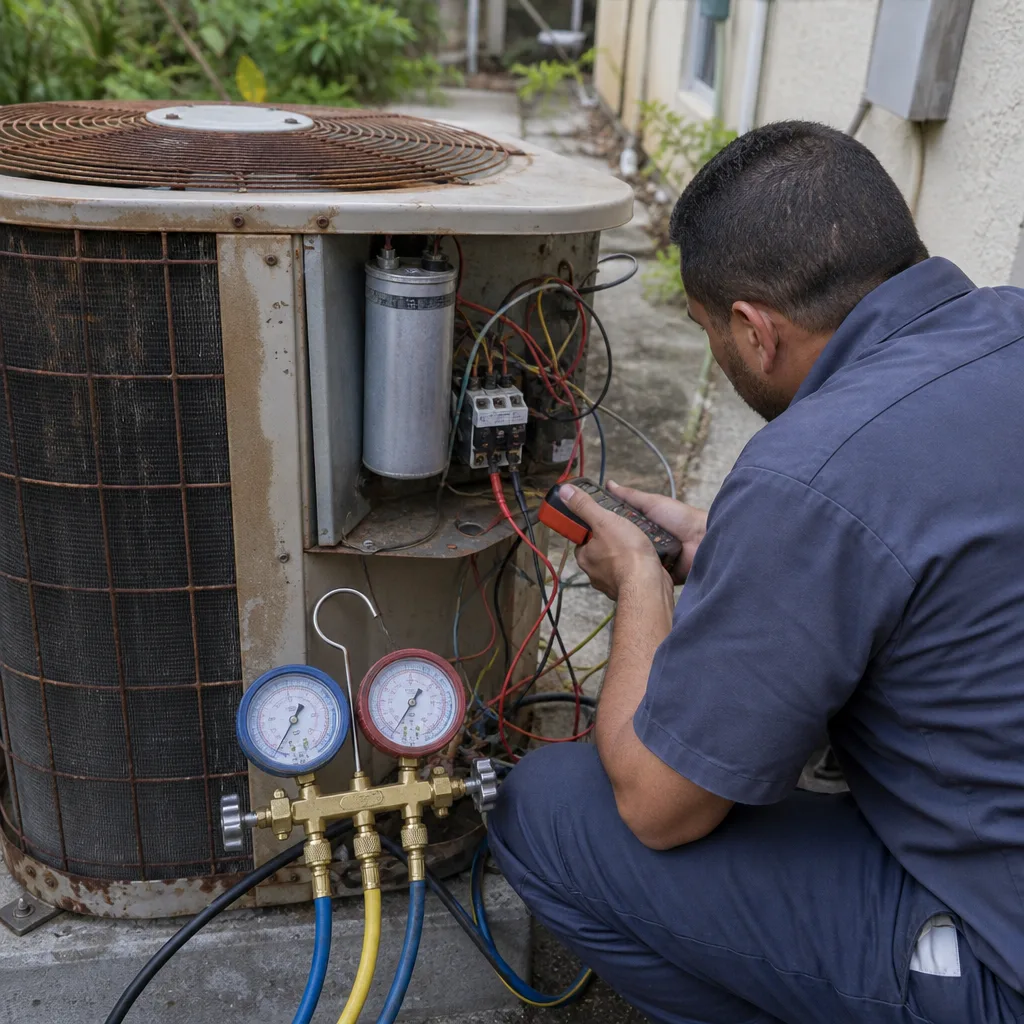
See the difference
 Before
 After
 Before
 After
 Before
 After
When to Call a Professional
Some HVAC issues are homeowner-visible but not homeowner-repairable. Call us for any of these: the system won’t turn on after a power restoration or a storm, the compressor hums without starting or trips the breaker, the unit is short-cycling (turning on and off every few minutes), the air is warm when cooling is called for, there’s water pooling around the indoor unit, you smell burning, or any part of the outdoor unit looks or sounds damaged. These are the situations where waiting costs more than calling – and where the cost of an incorrect diagnosis is much higher than the cost of getting it right the first time.
For electrical components, do not attempt repairs yourself. Capacitors, contactors, and the compressor circuitry inside the outdoor unit hold a dangerous charge, even when the breaker is off. A trained technician works on those parts safely; a homeowner with a screwdriver does not. Valor AC Repair offers free estimates in Pompano Beach and can work with your insurer on storm-related claims. Call (844) 952-3433. We answer 24/7. Fast dispatch from 7am to 7pm, Sunday through Friday. If you’re not sure whether the situation is urgent or routine, call anyway – we’d rather tell you it’s routine than have you wait through a heat wave with a failing system.
Frequently Asked Questions
Photograph the outdoor unit and air handler, record the model and serial numbers, secure loose debris away from the equipment, and turn the thermostat off before landfall. Leave the coil uncovered. The photographs and model numbers matter most if you later need a warranty or insurance claim on storm-damaged equipment. Call (844) 952-3433 for an exact pre-storm inspection quote – estimates are free.
No – wait until power is stable and do a quick inspection first. Post-storm power often comes back in stages, and a surge during restart can damage the compressor. Confirm steady lights, inspect the outdoor unit for debris and standing water, run fan-only for a few minutes, then switch to cooling. If the unit doesn’t start cleanly, turn it off and call (844) 952-3433.
It’s genuinely dangerous once indoor temperatures and humidity push the heat index into the high 100s. Children, older adults, and anyone with cardiac or respiratory conditions are the highest risk. Signs of heat exhaustion include heavy sweating, weakness, nausea, and headache; signs of heat stroke include confusion and hot dry skin. Heat stroke is a medical emergency – call 911, don’t wait on the AC. Call (844) 952-3433 to schedule service as early as possible once the failure starts.
Yes – most breakdowns we see start with a component that was already failing before the stress event that pushed it over the edge. A spring diagnostic before the first heat wave catches weak capacitors, dirty coils, and low refrigerant charge before they become failures. If you have a AC installation on the horizon, our team handles the full lifecycle, so maintenance, repair, and replacement stay with the same trained people. Call (844) 952-3433 for a free estimate.
Usually not. Manufacturer warranties typically cover defects in materials and workmanship, not damage from storms, power surges, or impact. That’s why the pre-storm documentation and post-storm records matter – they let you distinguish an actual defect from a storm-caused failure when a claim is filed. If you’re in Pompano Beach and not sure which side your situation falls on, call (844) 952-3433 and we can walk through it.
Model and serial numbers for both units, a clear symptom timeline, thermostat settings and room temperature reading, and what the system is actually doing (outdoor fan status, air temperature, breaker status, any error codes). With those in hand, a diagnostic call takes minutes instead of a callback loop. Call (844) 952-3433 – estimates are free and we can sometimes diagnose from a clear description before we arrive.
The Bottom Line
HVAC emergencies in Pompano Beach almost always cluster around the same windows – first heat wave, post-storm, holiday weekends – and most of the suffering is preventable. Do these four things and you’re ahead of the vast majority of the market: keep the system maintained so it can absorb a stress event, document the equipment before storms, follow the restart protocol after power restoration, and build a small emergency file that lives on your phone. The preparation costs a few hours a year. The chaos it prevents costs weeks. Working with a company that services nine major brands means the same team that diagnoses your system can handle the parts, the documentation, and – if it comes to it – the replacement, without sending you shopping for a second contractor. If anything in this guide describes a situation you’re already in, don’t wait for the next window.
Call Valor AC Repair at (844) 952-3433 for a free estimate. We answer 24/7. Fast dispatch from 7am to 7pm, Sunday through Friday. Warm in the summer, prepared all year – and ready to show up when it counts.
Written by the team at Valor AC Repair.