
Last updated November 15, 2026
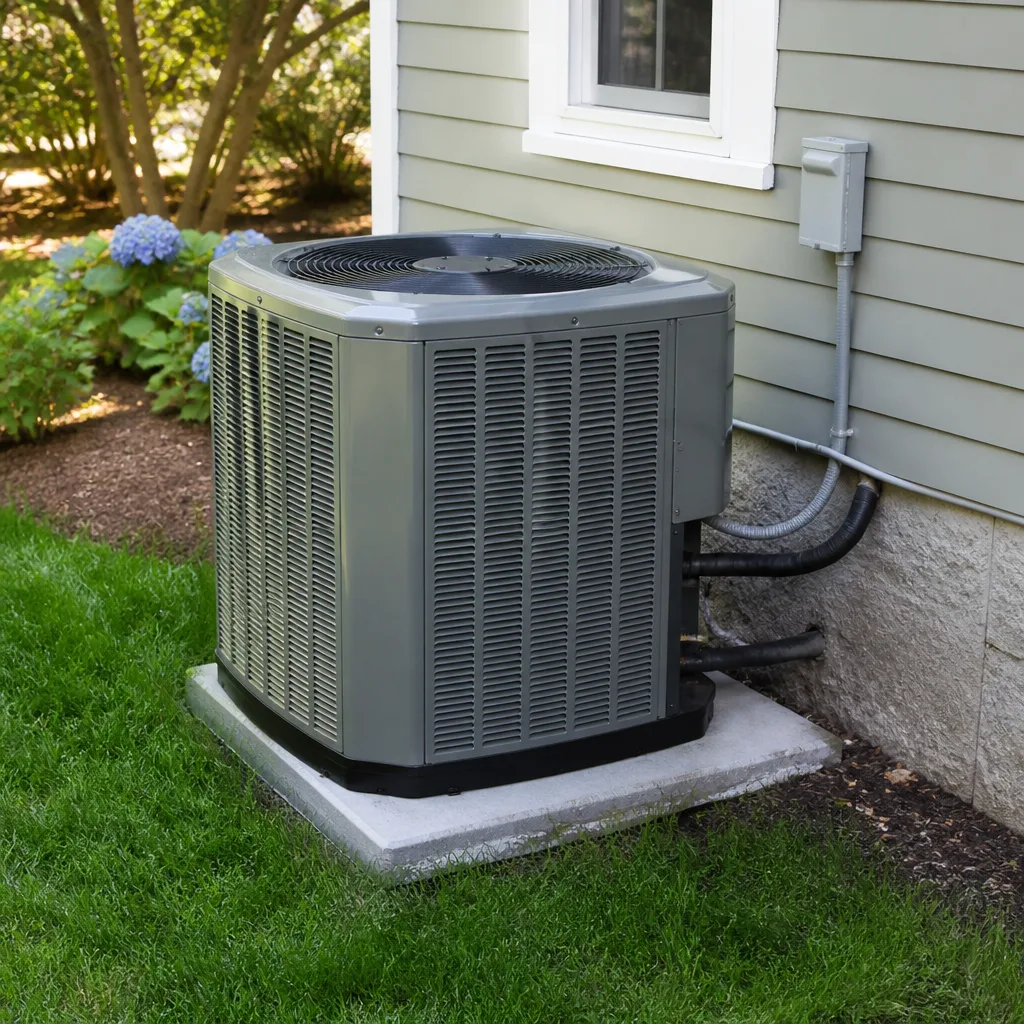 AC repair
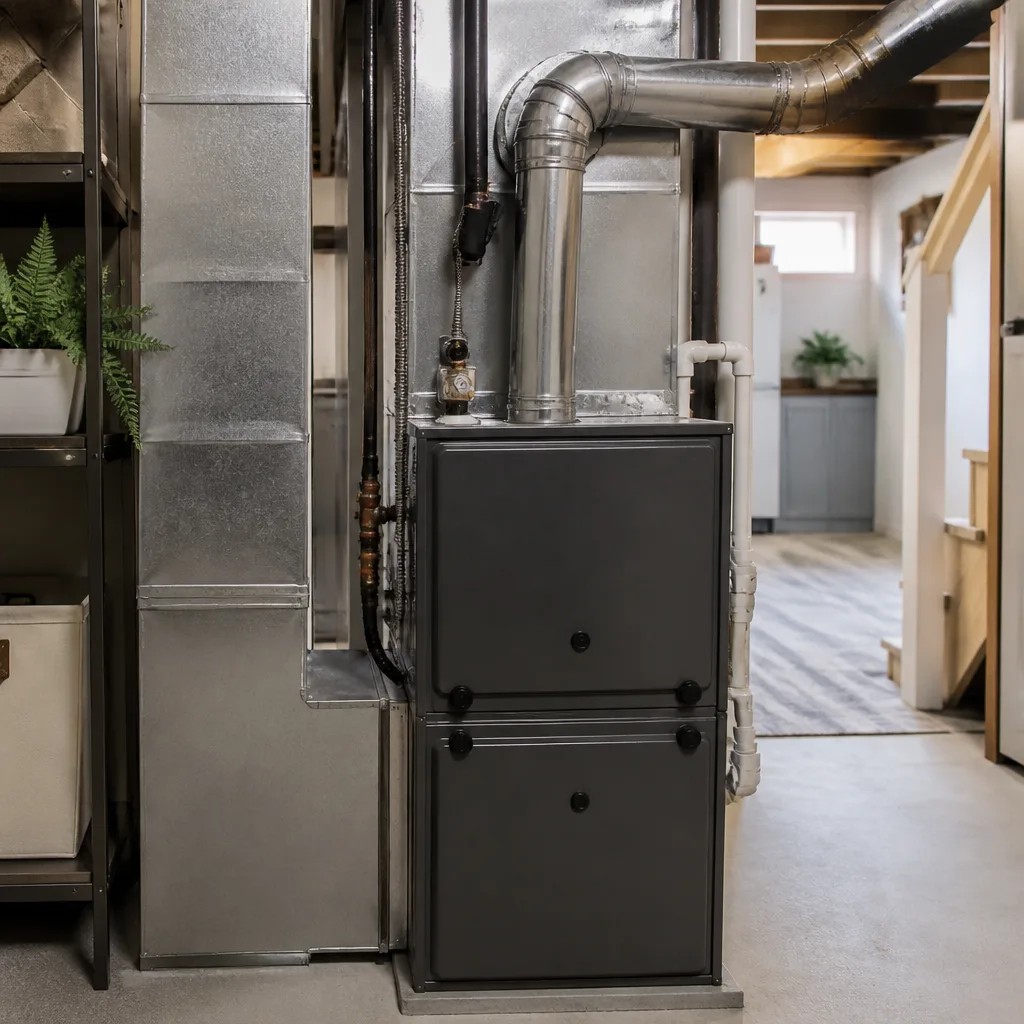 Furnace & heating
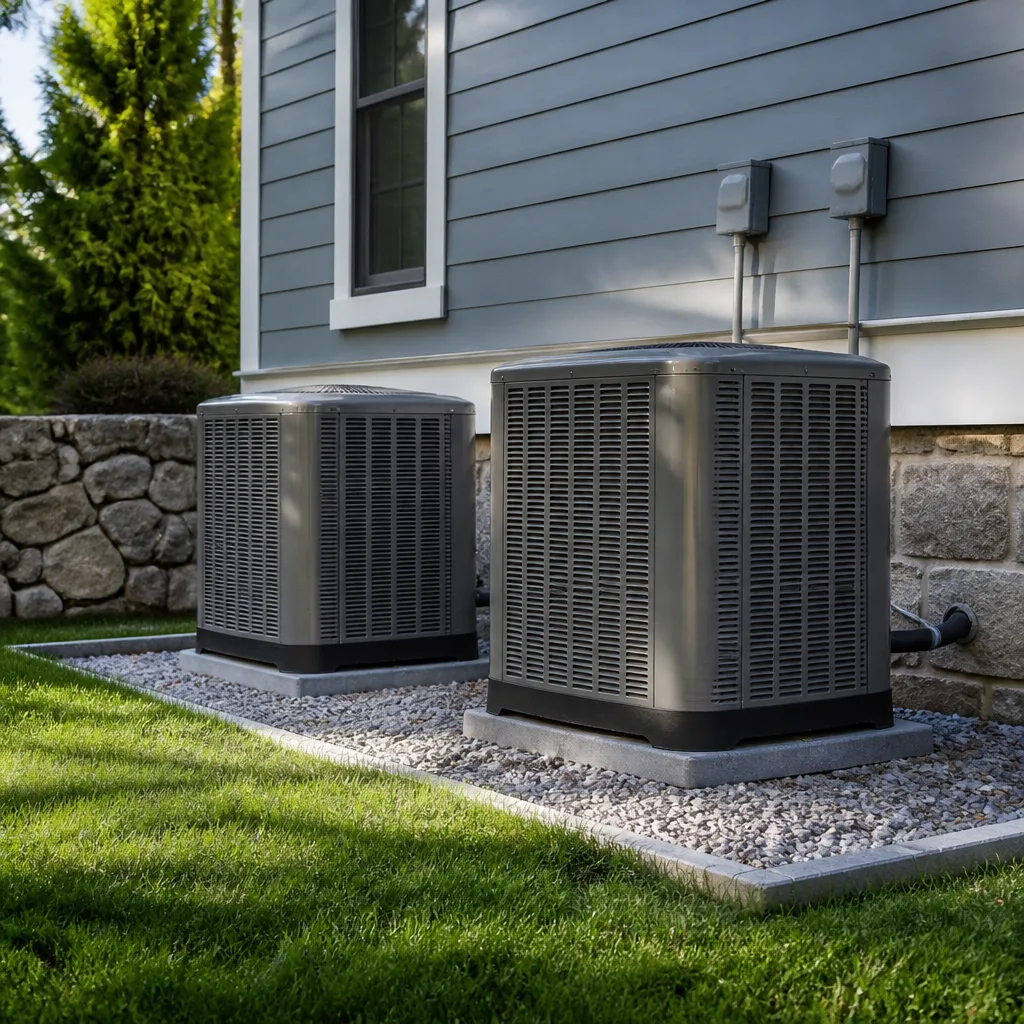 Heat pumps
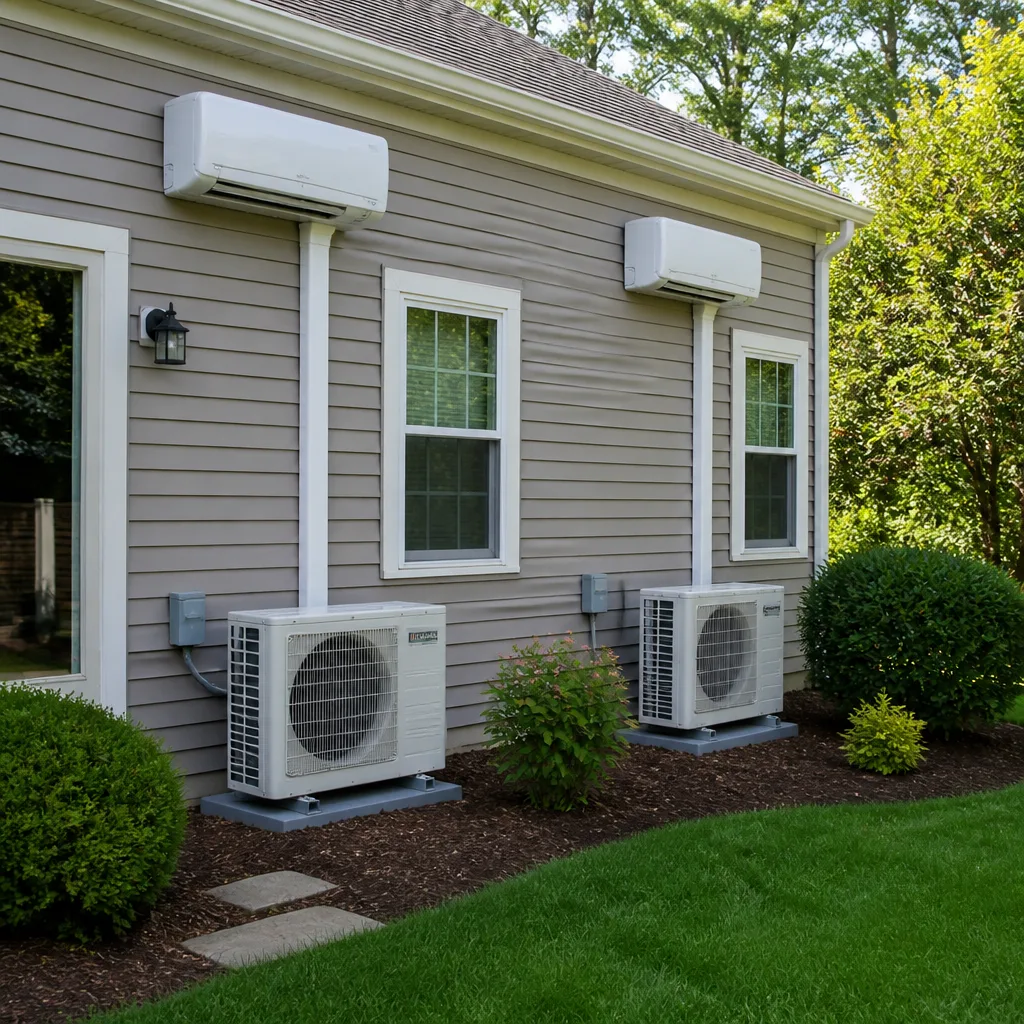 Ductless mini splits
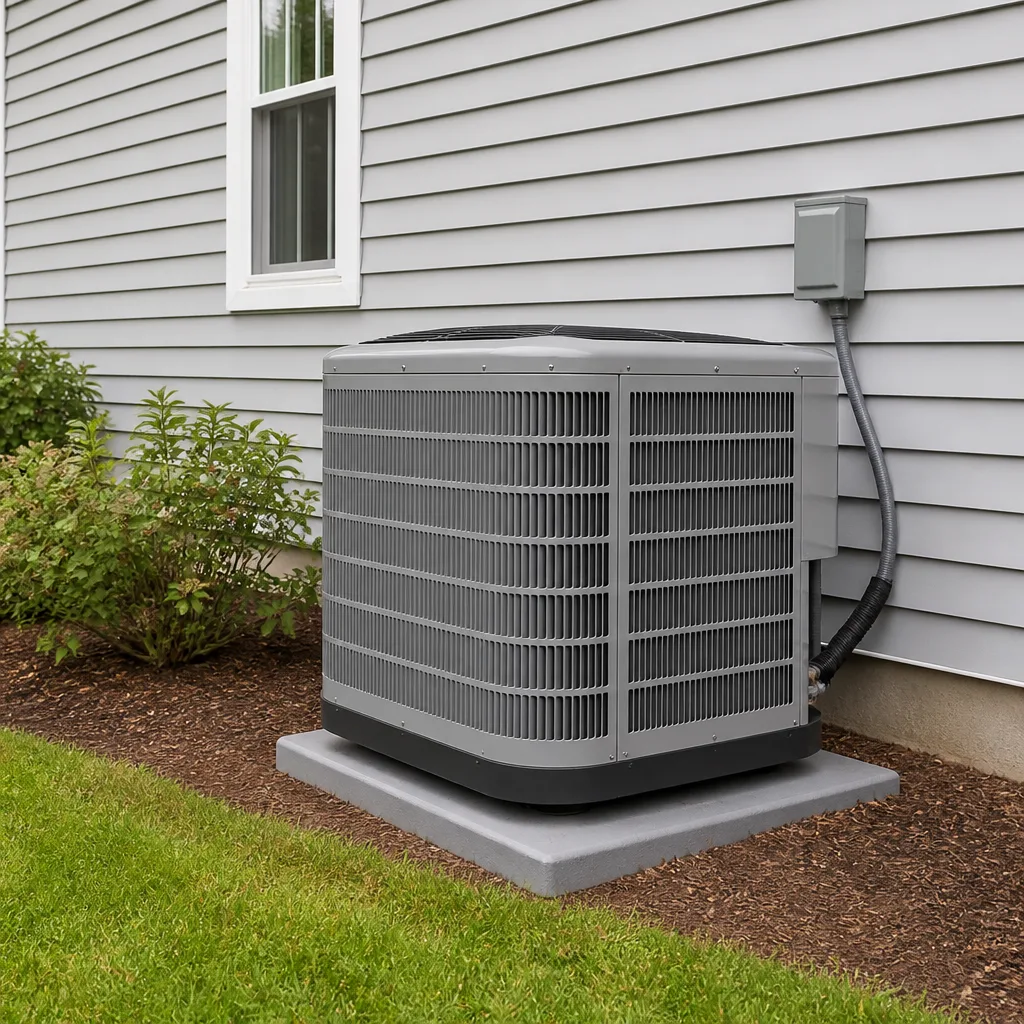 Carrier
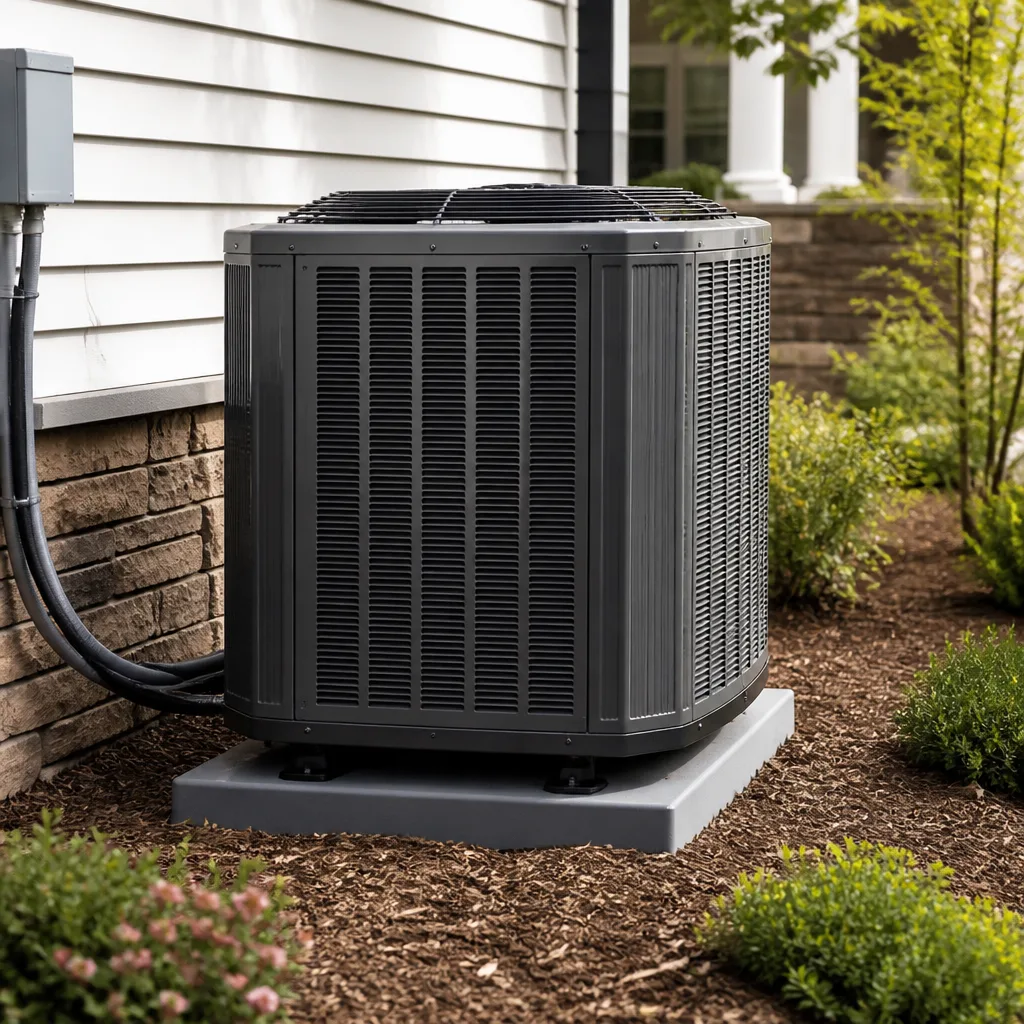 Trane
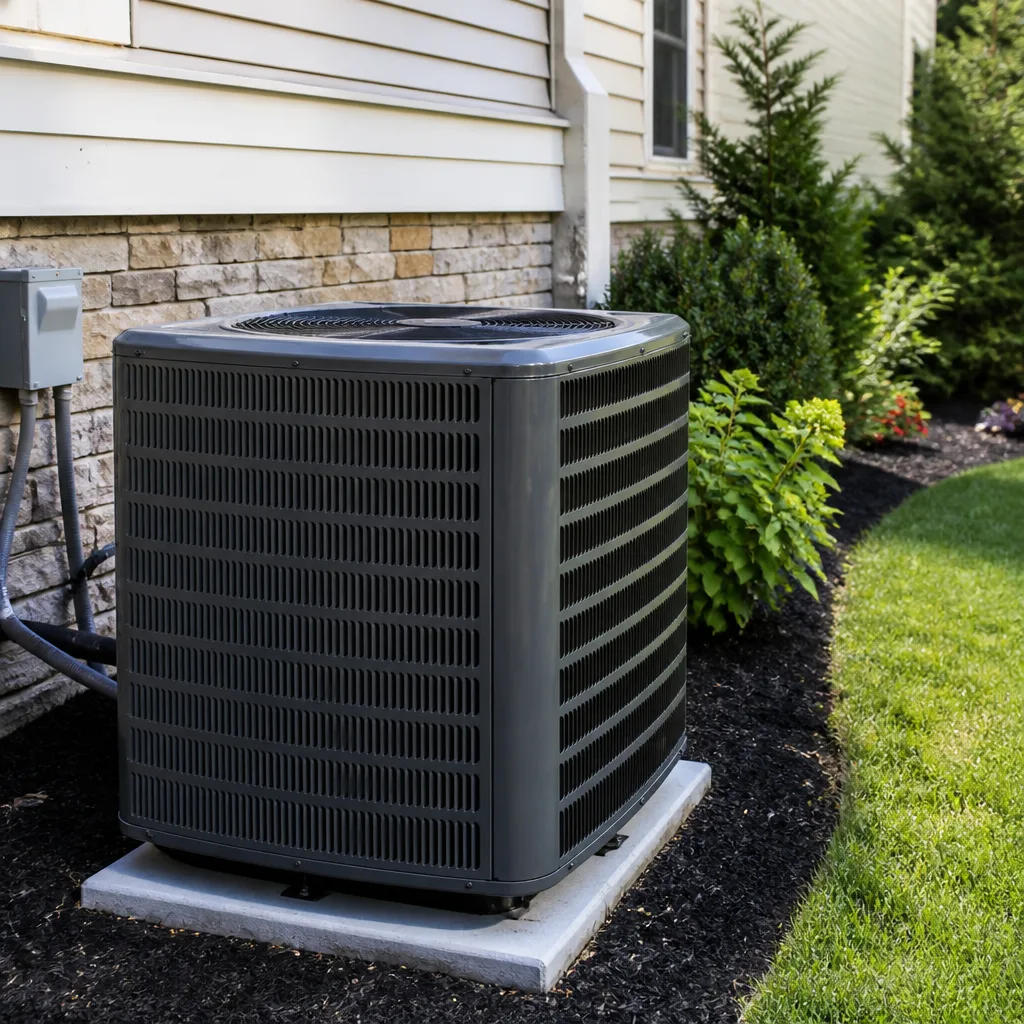 Goodman
Seasonal tune-up and full diagnostic on your Carrier, Trane, or Goodman system - readings shown to you before any repair is proposed
Diagnosis first, numbers second - you approve the repair price before a single part goes in.
Get your free estimateSeasonal HVAC Care for Pompano Beach: Year-Round Homeowner’s Guide
The month we get the most no-cooling calls in Pompano Beach isn’t July. It’s June. That surprises people, because July is hotter on paper. But June is when the system goes from moderate spring loads to full hurricane-season humidity in a matter of days, and every deferred maintenance problem picks that moment to show itself at once. A coil that was borderline in May can’t keep up by the second week of June. A capacitor that was hanging on gives out. The pressure of the transition exposes what a gentle spring was hiding. This guide maps the actual South Florida climate calendar to the maintenance actions that match what your equipment is about to face, season by season, so you’re not learning about a weakness during the hottest week of the year.
Quick Answer
Seasonal HVAC care in Pompano Beach works around four distinct stress periods rather than four traditional seasons: a pre-summer ramp-up in May, peak humidity season from June through September, a brief shoulder season in October and November, and a cold-snap test period from December through February when heat strips and heat pump reversing valves get their only real workout. Matching maintenance to what the system is about to face – not just changing a filter on a schedule – is what keeps a Pompano Beach system running through the months that actually break equipment.
Styles & brands we work with
- AC repair
- Furnace & heating
- Heat pumps
- Ductless mini splits
- Carrier
- Trane
- Goodman
Table of Contents
- Why Pompano Beach Has Four HVAC Stress Periods, Not Four Seasons
- The Pre-Summer Ramp-Up: What to Do in May
- Peak Humidity Season: June Through September
- The Shoulder Season: October and November
- The Cold-Snap Test Period: December Through February
- Storm-Season Equipment Protection: Before and After
- Reading Runtime Data Before It Becomes a Repair Call
- Your Pompano Beach Maintenance Calendar at a Glance
Why Pompano Beach Has Four HVAC Stress Periods, Not Four Seasons
Most homeowner guides are written for a climate with a real winter, a real spring, and a long stretch of mild weather where the system rests. Pompano Beach doesn’t work that way. The AC runs hard for most of the year, the heating side sits idle for months and then gets called on without warning, and the humidity does more damage to a system than raw temperature ever does. Treating the whole year as one continuous summer is why systems fail at the worst possible time.
Here’s how the year actually breaks down for a residential system in this climate:
- Pre-summer ramp-up (May): Loads climb steadily, humidity rises, and the system transitions from occasional cooling to constant runtime. This is the last easy window to catch a problem before it becomes an emergency.
- Peak humidity season (June through September): The system runs near continuously, drains work overtime, and any weakness in the refrigerant circuit, the air handler, or the condensate line shows up under sustained load.
- Shoulder season (October and November): Runtime drops, which is exactly when it’s worth checking the things you can’t inspect while the system is running flat out – and when deferred repairs are easiest to schedule.
- Cold-snap test period (December through February): The heat strips or heat pump reversing valve that’s been sitting dormant gets its first real test, often on the coldest night of the year. This is the period that reveals neglect on the heating side.
Each period stresses different components, which means the maintenance that matters changes through the year. A filter change in March is good practice. A pre-summer load readiness check in May is what actually reduces your odds of a June failure. The two aren’t the same job, and the second one gets skipped far more often.
The Pre-Summer Ramp-Up: What to Do in May
May is the highest-value maintenance window of the year in Pompano Beach. The system is still working moderate loads, so a technician can inspect it under semi-realistic conditions without the pressure of a homeowner sitting in a hot house. Anything borderline gets caught before June’s humidity turns borderline into failed. If you only do one service visit a year, this is the one that protects your summer.
“Change your filter” is not the whole story. A pre-summer readiness check should cover concrete system-load items:
- Condensate drain and pan inspection. During peak season the coil removes gallons of moisture a day, and a partially clogged drain that handles April fine can overflow in July. Clear the line, check the float switch, and confirm the pan is draining freely before the heavy season.
- Capacitor and contactor check. These are the components that fail most under sustained high-load runtime. A technician can test them and replace a marginal one before it strands you on a 95-degree afternoon.
- Refrigerant charge verification. A system that’s slightly low in May will struggle badly in August. Checking charge and looking for the source of a slow leak is far cheaper than a mid-summer breakdown.
- Coil cleaning. A dirty evaporator or condenser coil cuts capacity exactly when you need it most. Cleaning before peak season restores the capacity you paid for.
- Airflow check. Blocked returns, crushed flex duct, and a dirty blower wheel all reduce airflow. Low airflow means longer runtime, more humidity, and more strain on the compressor.
- Thermostat calibration and settings. Confirm the system is set up for the season and that any setback schedule makes sense for this climate.
A proper pre-summer visit is also the moment to look at the equipment you actually own. If your system is a Carrier, a Trane, or an American Standard – or any of the nine major brands we’re certified to service – the technician should know that equipment’s specific failure patterns and not spend the visit learning your system from scratch. That’s part of why multi-brand experience matters in May: the closer the diagnosis is to your actual equipment, the less likely a marginal part gets missed.
Peak Humidity Season: June Through September
June through September is when your system either holds up or doesn’t. The load is relentless, the humidity is at its highest, and the equipment runs close to continuous. Most of the serious repair calls we handle in Pompano Beach fall in this window. The goal during peak season isn’t heavy maintenance – it’s monitoring and quick response. You don’t want to disturb a system that’s working; you want to catch a decline early.
What to watch for during the peak months:
- Rising runtime with no change in the weather. If the system is running longer than it did a few weeks ago at the same thermostat setting, something is degrading. It might be a dirty coil, a failing capacitor, or a refrigerant issue.
- Weak airflow from the vents. Reduced airflow in peak season usually means a filter, a blower issue, or a duct problem. Don’t ignore it – low airflow causes the coil to freeze and the compressor to strain.
- Water around the air handler or a wet ceiling stain. That’s a condensate problem, and in peak humidity season it gets worse fast. Shut the system down and get it looked at.
- Ice on the refrigerant lines or the indoor coil. Ice is a sign of low refrigerant or restricted airflow, not a sign the system is “working well.” Turn it off and call.
- Humidity that won’t come down. A system that cools but doesn’t dehumidify has a problem – often an oversized unit, low charge, or an airflow issue. In this climate, indoor humidity is as important as temperature.
When something does fail in June, July, or August, speed matters. A failed system in peak heat and humidity isn’t just uncomfortable – it’s a genuine health risk, especially for older adults and anyone with respiratory issues. This is the one time of year where same-day service is more than a convenience. We answer 24/7, and we run fast dispatch from 7am to 7pm so a no-cooling call in peak season gets handled the same day whenever possible. If you need AC repair during the peak, call (844) 952-3433.
The Shoulder Season: October and November
October and November are the most underused maintenance window of the year in Pompano Beach. Runtime drops, the weather moderates, and the system is finally off enough that a technician can inspect and service it without fighting peak-season pressure. It’s also the easiest time to schedule a repair – the peak-season scramble is over and the cold-snap scramble hasn’t started. If you deferred anything in the summer, this is when to deal with it.
What the shoulder season is good for:
- Deferred repair completion. Anything that was “getting by” through the summer should be addressed now, before the next peak or the next cold snap.
- Duct inspection. A duct problem that only shows up under peak load is easier to diagnose when the system isn’t running continuously. Look for leaks, disconnected runs, and crushed sections.
- Coil and drain cleanup. A second cleaning after peak helps the system start the cooler months from a clean state.
- Heating-side pre-check. Before the cold-snap period arrives, get the heat side looked at. A dormant heating element or a stuck reversing valve is far cheaper to catch in October than on the coldest night of the year.
- Thermostat and controls review. If you’ve been meaning to look at your thermostat data or scheduling, this is the calm month to do it.
The shoulder season is also when a lot of homeowners start asking the bigger question: is it time to repair or replace? A system that’s been barely keeping up through peak season often has a real answer here. If the equipment is old, if the repair bill is climbing, or if you’re facing a compressor or coil replacement, it’s worth having that conversation before you’re forced into it in June. Our approach is to tell you which one actually makes sense for the system in front of us – we’re not a single-brand dealer with quotas to hit, so the recommendation isn’t tied to a sales target. If replacement is the honest answer, you’ll hear it; if a repair will buy you several more good years, you’ll hear that too. When the time comes for new equipment, see our AC installation page for what that process looks like in Pompano Beach.
The Cold-Snap Test Period: December Through February
Pompano Beach doesn’t have a long winter, but it does have cold snaps – brief stretches of genuinely cool weather that catch a system that’s been sitting on the cooling side for months. This is when the heating side gets its only real test of the year, and it’s the period that reveals how well the heat side has been ignored. A heat pump reversing valve that’s stuck, a heat strip that’s failed, or a defrost board that isn’t cycling will all surface the first cold night – usually when you need heat most.
Why winter is the right time to service the heating side here:
- The reversing valve only gets exercised in heating mode. A valve that sits in cooling mode for nine months can stick or fail to shift. Testing it in cool weather confirms it actually works before you need it.
- Heat strips and sequencers fail quietly. A failed heat strip doesn’t affect cooling, so it can sit undetected until a cold night reveals half your heat is missing.
- Defrost controls only get tested in cold operation. A heat pump that doesn’t defrost correctly ices up in heating mode – and cold snaps are the only time this shows.
- Cold weather reveals airflow problems that summer masks. Heating mode runs hotter air through the same ducts, so leaks and restrictions show up differently.
What a cold snap actually tells you about a neglected system is simple: if it’s been ignored on the heat side, it’ll tell you on the worst night. Getting the heating side serviced in December, before the first real cold snap, is far better than discovering a failed component at 11pm on the coldest night of the year. We handle Valor AC Repair heating and cooling under one roof – the same team that services your cooling side can test the heat side, so you’re not hunting for a second contractor when the seasons turn.
Storm-Season Equipment Protection: Before and After
Hurricane season overlaps with peak humidity season, so a storm can hit a system that’s already running hard. What you do before and after a named storm matters for two reasons: it protects the equipment, and it protects your manufacturer warranty. If storm damage isn’t documented, a warranty claim on the equipment can be denied – so treat documentation as part of the job, not an afterthought.
Before a named storm:
- Turn the system off at the thermostat before the worst of the weather. A system that’s off when power flickers or drops is less likely to be damaged by a surge or a hard restart.
- Secure or remove anything loose around the outdoor unit. Loose debris, patio furniture, and yard items become projectiles in high wind, and the outdoor coil is a target.
- Note the condition of the outdoor unit. A quick photo of the unit and the surrounding area before the storm is your baseline if you need to make a damage claim afterward.
- Don’t tape or wrap the outdoor unit. Wrapping a condenser traps moisture and does more harm than good.
After the storm:
- Look at the outdoor unit before you turn anything on. Check for visible damage, debris inside the cabinet, or a bent coil. If anything looks off, leave the system off and get it inspected.
- Check for water intrusion at the air handler and indoor coil. Storm-driven rain can get into places the system wasn’t designed for.
- Photograph any damage before you touch it. This is what protects a warranty claim. Document the condition of the equipment, the serial plate, and any visible damage.
- Wait for a technician if the system acts up after the storm. Don’t keep cycling a system that tripped a breaker or short-cycled – repeated restarts can turn a small problem into a compressor failure.
If a storm does damage your system, the inspection and the written documentation are what matter. We can work with your insurer on the repair, and we’ll document what we find so there’s a clear record. A named storm is also when the difference between a quick diagnosis and a guess really shows, which is why we work on the system you have – Carrier, Bryant, Trane, American Standard, and the rest of the major brands – rather than only the equipment we’d like to sell you.
Reading Runtime Data Before It Becomes a Repair Call
A smart thermostat is one of the most useful maintenance tools you already own, and most homeowners don’t use it that way. The runtime data it collects shows you how your system is performing month over month, which means you can spot seasonal degradation before it becomes a repair call. You’re not looking for a single bad day – you’re looking at the trend.
What to watch in your thermostat’s runtime history:
- Rising daily runtime at a steady outdoor temperature. If the system ran five hours a day in April and runs seven hours a day in June at similar indoor and outdoor temps, something changed. That’s your early warning.
- Longer cycle times with normal cooling. A system that’s cycling less often but running longer per cycle is often struggling with capacity or airflow.
- Short cycling. Frequent on-off cycles can point to an oversized system, a refrigerant issue, or a failing component – and short cycling is hard on the compressor.
- Runtime that doesn’t drop when the weather moderates. A system that keeps running hard on a mild day has a problem the thermostat can show you before a repair bill does.
- Heating-side runtime in winter. In the cold-snap months, watch how much the heat side runs. A sudden spike in heating runtime can reveal a failed heat strip or a reversing valve problem.
The trick is to look at the data in the same rhythm as the season. Check it at the start of the pre-summer ramp-up, again mid-peak, again in the shoulder season, and once in the cold-snap period. Four quick reviews a year, matched to the four stress periods, will catch most of what a scheduled service visit would – and they’ll tell you when to call for AC repair before the problem gets expensive.
Your Pompano Beach Maintenance Calendar at a Glance
Here’s the whole year in one view, tied to the four stress periods:
- May – pre-summer readiness. Full system inspection: drain, capacitor, contactor, charge, coils, airflow, thermostat. This is the highest-value visit of the year.
- June through September – peak monitoring. Watch runtime, airflow, humidity, and water. Respond fast to any no-cooling event. Keep the filter clean; don’t disturb a working system otherwise.
- October and November – shoulder service. Complete deferred repairs, inspect ducts, clean coils and drains, and get the heating side pre-checked. Decide on repair vs. replacement if the system struggled through summer.
- December through February – cold-snap test. Test the reversing valve, heat strips, and defrost controls before the first cold snap. Service the heat side now, not on the coldest night.
- Storm windows within hurricane season – protect and document. Before a named storm, power down and secure the outdoor unit and photograph its condition. After, inspect before restarting and document any damage for warranty purposes.
Year-round, check your thermostat runtime data at each transition. The data tells you whether the maintenance is keeping pace with the climate – and the climate here doesn’t let a system coast.
Common Mistakes to Avoid
- Treating the whole year as one long summer. Pompano Beach systems have four distinct stress periods, and maintenance that matches the season protects the equipment far better than the same generic check every month. If you service in July and skip May, you’ve done the hardest work at the worst time.
- Skipping the heat side because “it never gets cold here.” Cold snaps happen, and a dormant heat strip or reversing valve can fail without warning. Test the heat side in December, before you need it.
- Ignoring rising runtime. A system that’s running longer than it did last month is telling you something. Waiting for a full breakdown costs more than an early diagnosis – the smart thermostat data is the early warning most people throw away.
- Wrapping or taping the outdoor unit before a storm. This traps moisture and risks damage. Secure loose items around the unit instead, and power down before the worst weather.
- Restarting a storm-damaged system without documentation. If the system acts up after a storm, a photo of the damage before you touch anything is what protects your warranty. Restarting a short-cycling system can make a small problem into a compressor failure.
- Letting a “borderline” part ride through peak season. A capacitor that tests marginal in May will often fail in July. Replacing a marginal part before peak season is cheaper than an emergency repair at peak load.
- Assuming a repair means a replacement. Plenty of systems get replaced that had years left. An honest assessment of the equipment in front of you is what should drive that decision, not a sales quota.
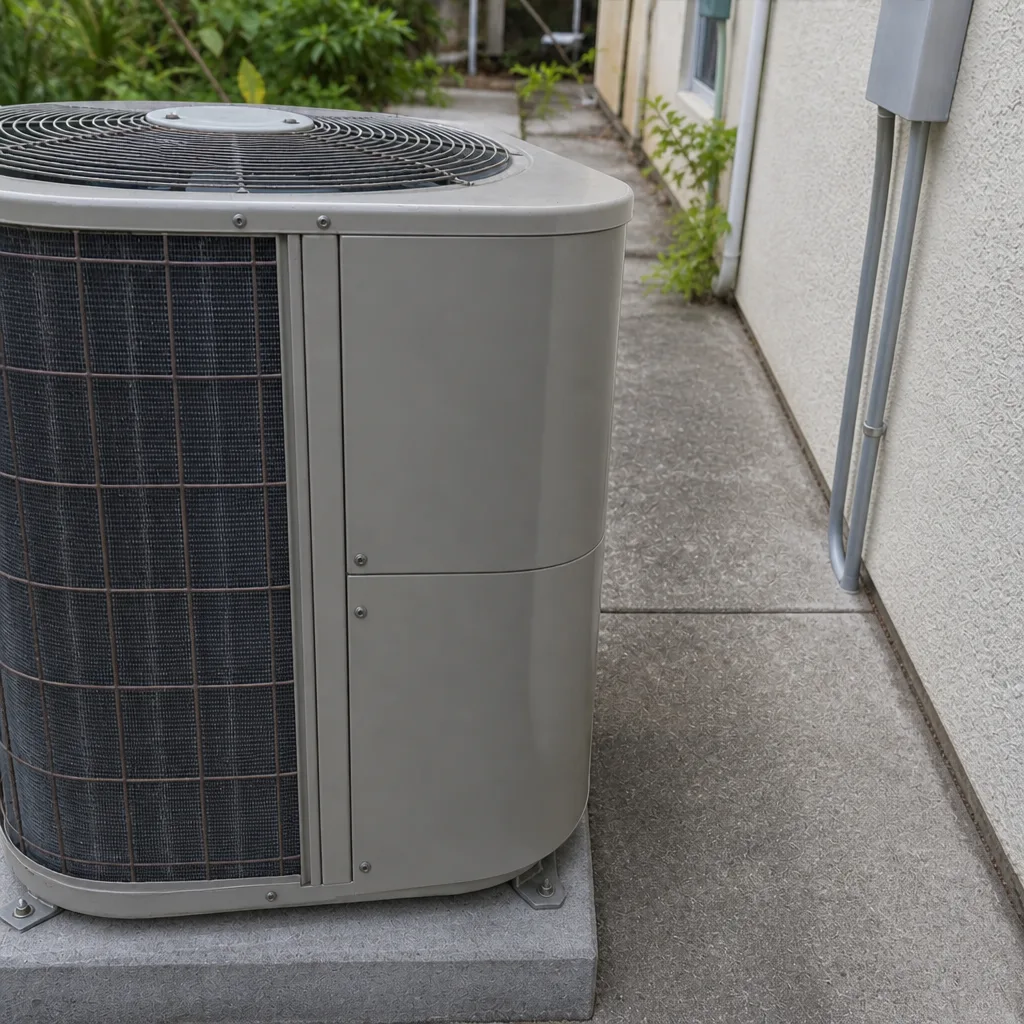
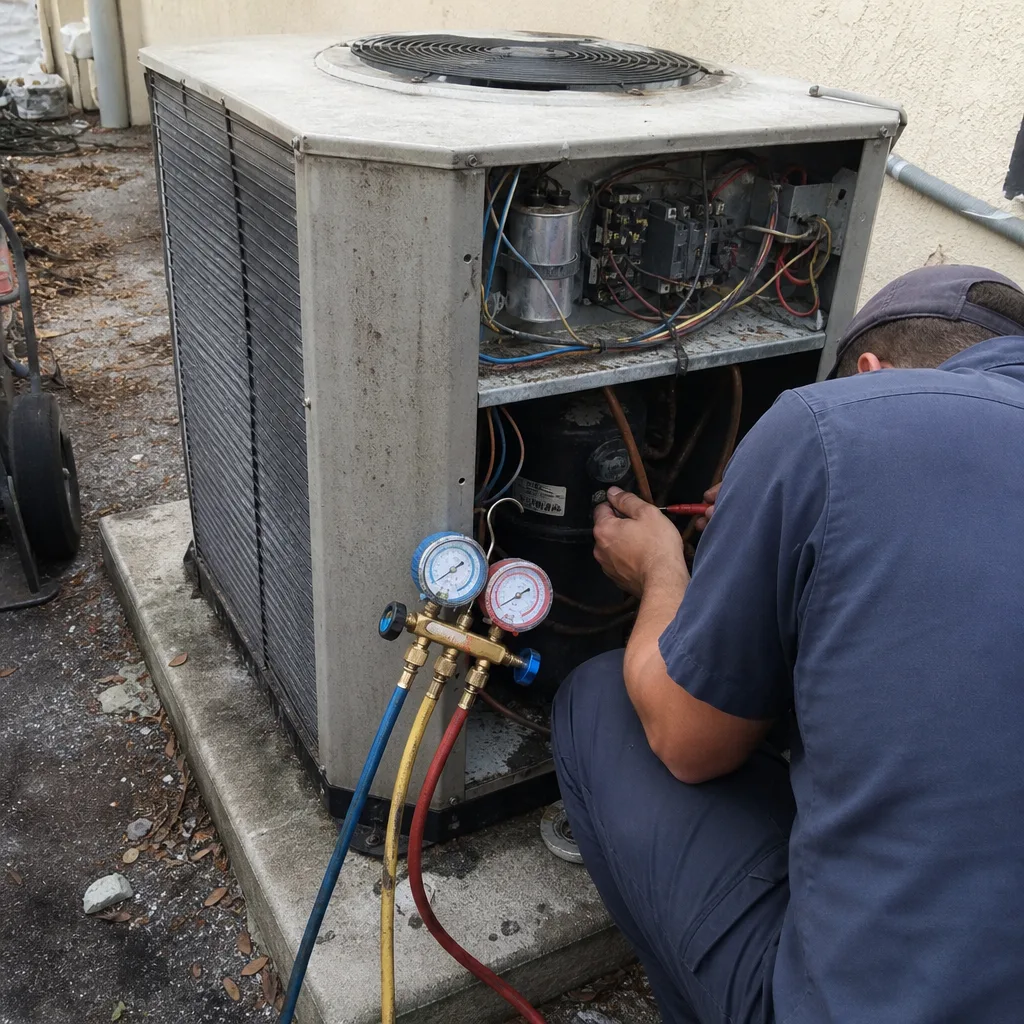
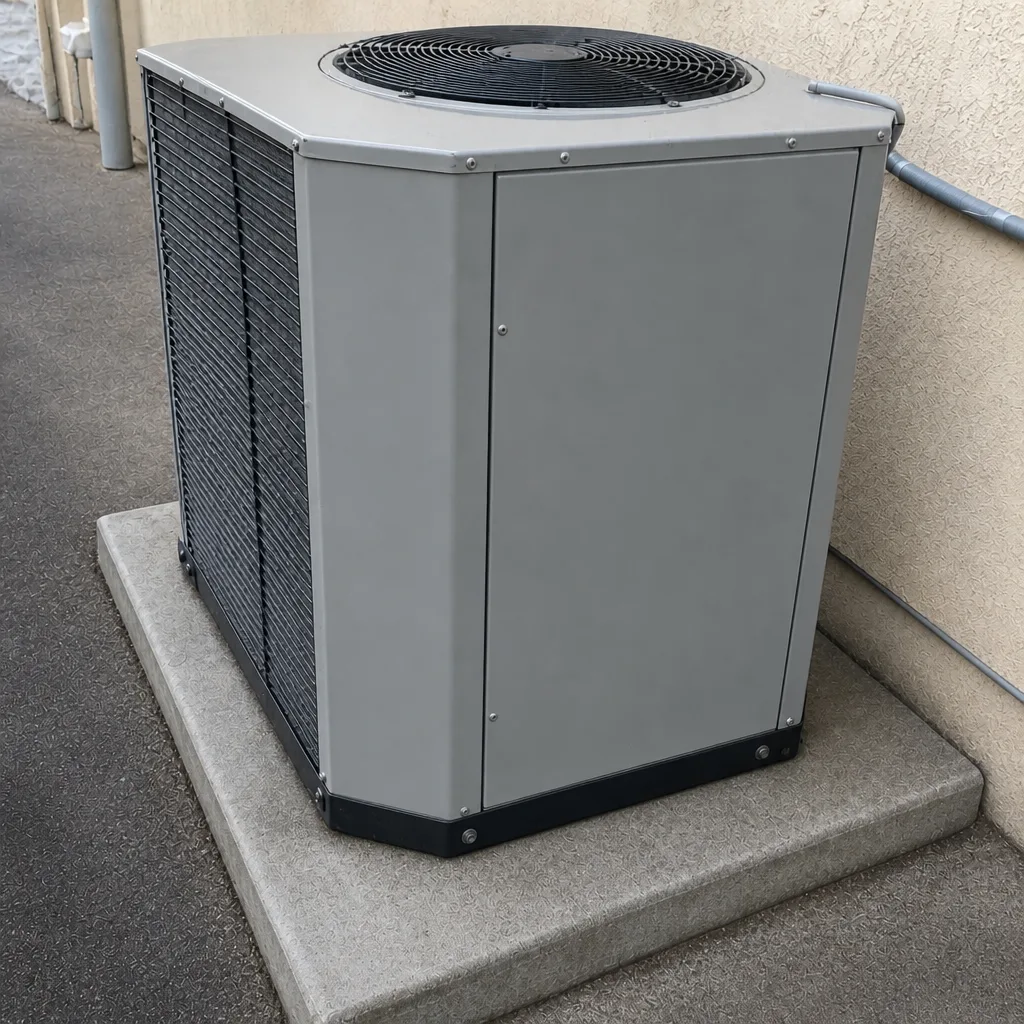
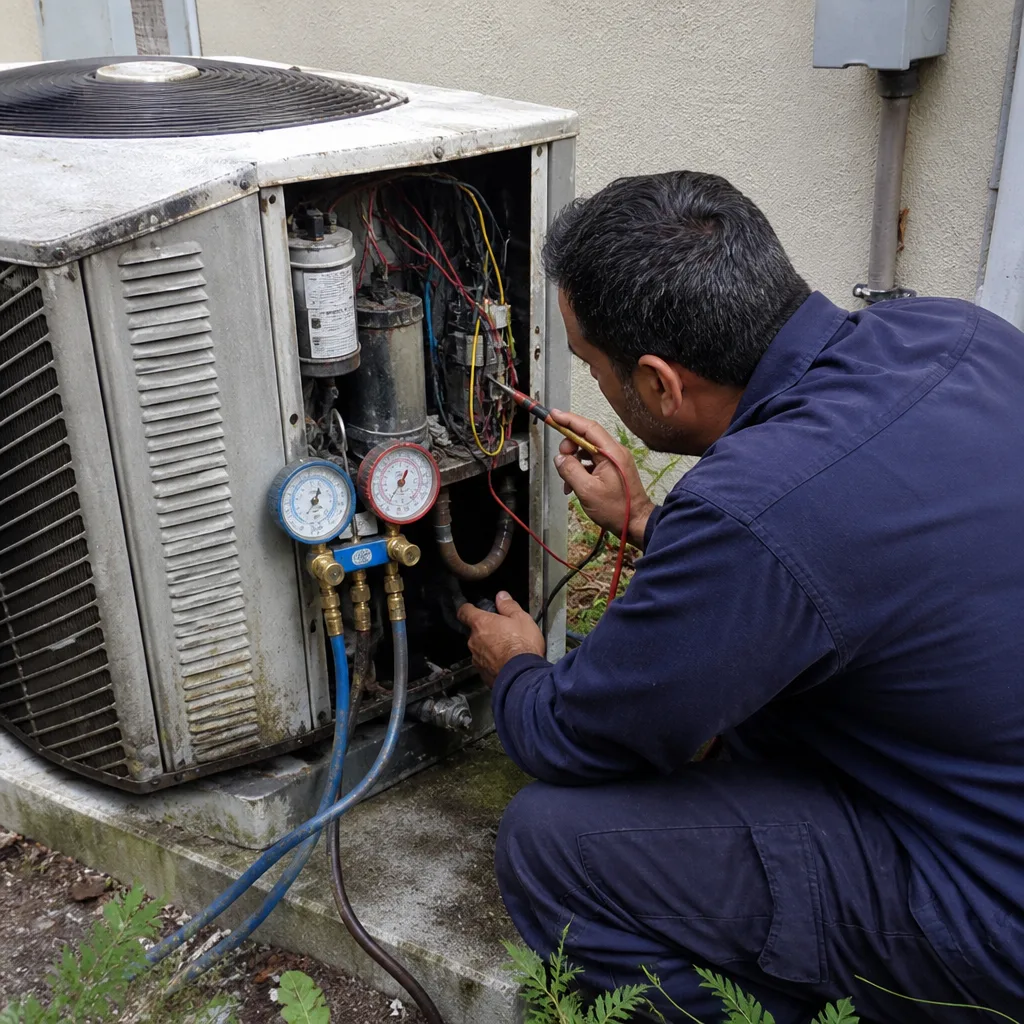
See the difference
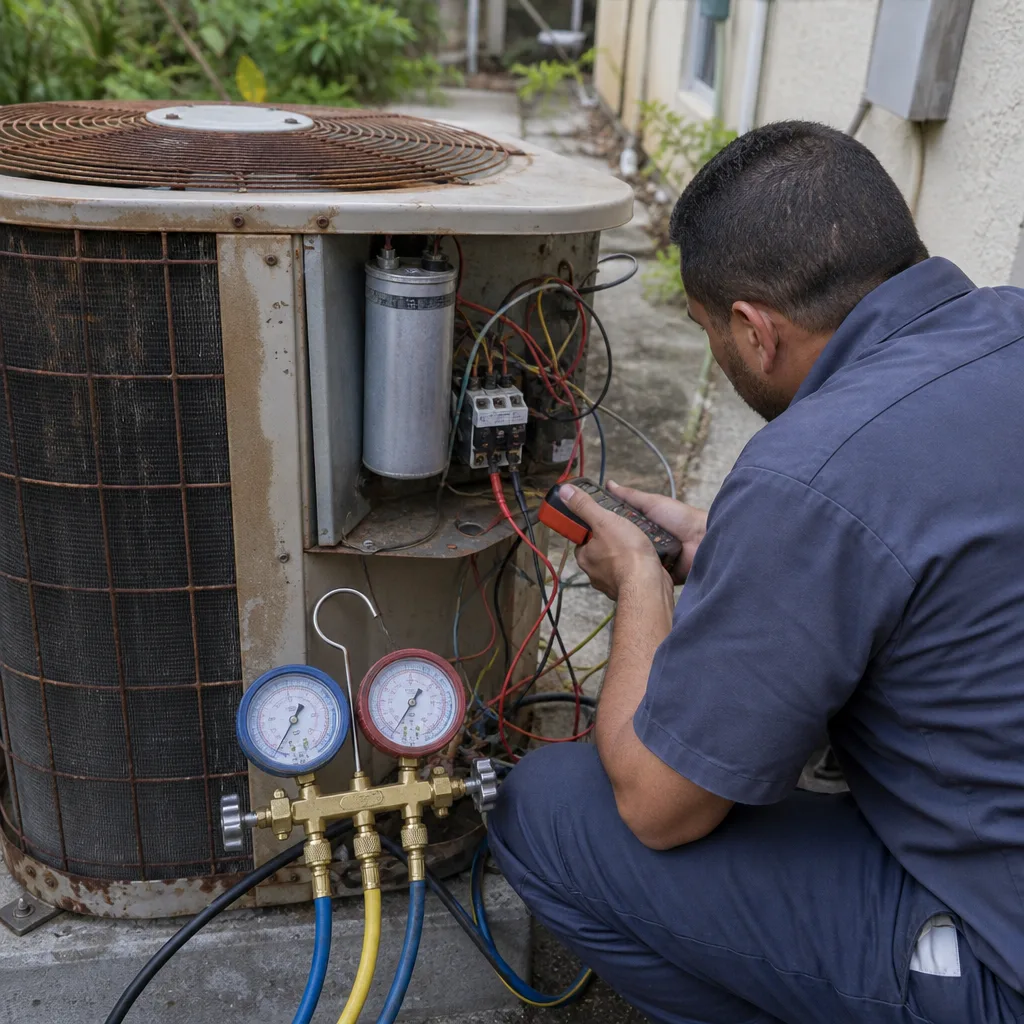 Before
 After
 Before
 After
 Before
 After
When to Call a Professional
Some things are worth a call, and in Pompano Beach the list is specific. Call if the system is running but not cooling, if you see ice on the refrigerant lines or the indoor coil, if there’s water around the air handler, if the system short-cycles, or if the heating side doesn’t come on during a cold snap. Call if you’re heading into the pre-summer ramp-up and you haven’t had the system inspected – May is the visit that protects your summer. Call if you’re in the shoulder season and the system barely made it through the peak. And call if a storm hit and the system isn’t behaving. No-cooling events in peak humidity are a health risk, so treat them as urgent. Valor AC Repair offers free estimates in Pompano Beach – call (844) 952-3433. We answer 24/7, with fast dispatch from 7am to 7pm. Our technicians have up to 8 years of experience working across nine major HVAC brands, and we’ll tell you plainly what the system needs.
Frequently Asked Questions
May is the most important maintenance month in Pompano Beach. That’s the pre-summer ramp-up, when the system is still under moderate load and a technician can catch and service the components – capacitor, drain, charge, coils, airflow – before June’s humidity turns borderline problems into failures. If you do only one service visit a year, make it the pre-summer readiness check. Call (844) 952-3433 for a free estimate on a pre-summer inspection.
June failures are more common because the system transitions from moderate spring loads to full hurricane-season humidity in a matter of days. That rapid load increase reveals every deferred maintenance problem at once – a marginal capacitor, a slightly low charge, a partially clogged drain – all at the same time, before the system has acclimated to peak runtime. July is hotter, but June is the transition that breaks things. If your system is struggling as the load climbs, call (844) 952-3433 for same-day service.
Yes, and December through February is the right time to do it. Pompano Beach does get cold snaps, and a heat pump reversing valve, heat strip, or defrost control that’s been dormant for nine months can fail without any sign on the cooling side. Testing the heating side before the first cold snap catches those failures before you need heat at the worst possible time. Call (844) 952-3433 to schedule a heating-side check in December.
Before a named storm, power the system down at the thermostat, secure loose items around the outdoor unit, and photograph the unit’s condition as a baseline. Don’t tape or wrap the condenser – it traps moisture. After the storm, inspect the outdoor unit for visible damage before turning anything on, check for water intrusion at the air handler, and photograph any damage before touching it. That documentation matters if you need to make a warranty or insurance claim. If the system is damaged, call (844) 952-3433 for an inspection.
Yes, if you read it against the seasons. Look for rising daily runtime at a steady outdoor temperature, longer cycle times, short cycling, or heating-side runtime that spikes in winter. Those trends are early warnings of degradation – a dirty coil, a failing component, or a refrigerant issue – often weeks before a full breakdown. Review the data at each of the four stress periods. If the trend looks off, call (844) 952-3433 for a diagnosis.
That depends on the system in front of you, not a rule of thumb. If the repair bill is climbing, if you’re facing a compressor or coil replacement on an old system, or if the system barely made it through peak season, replacement often makes more sense. If a repair buys you several good years, repair is the honest answer. We’re an independent, non-franchise operation with no brand quotas, so the recommendation is based on your actual equipment. Call (844) 952-3433 – the estimate is free, and we’ll tell you which one makes sense.
The Bottom Line
Pompano Beach doesn’t have four seasons, but it has four HVAC stress periods, and each one stresses different parts of your system. May is your highest-value maintenance window – pre-summer readiness is what protects the summer. Peak humidity season from June through September is about monitoring and fast response, not heavy service. October and November are for deferred repairs and the repair-versus-replace conversation. December through February tests the heating side you’ve been ignoring. Document storm damage before you touch anything, read your thermostat data at each transition, and match maintenance to what the system is about to face. That’s how you stop learning about a weakness during the hottest week of the year.
If you want the full picture on how we work, or you’re ready to schedule a pre-summer check, a shoulder-season repair, or a cold-snap heating test, get in touch. Valor AC Repair offers free estimates in Pompano Beach – call (844) 952-3433. We answer 24/7, with fast dispatch from 7am to 7pm. Estimates are free, and the written estimate sets the final price.
Written by the team at Valor AC Repair.