
Last updated November 15, 2026
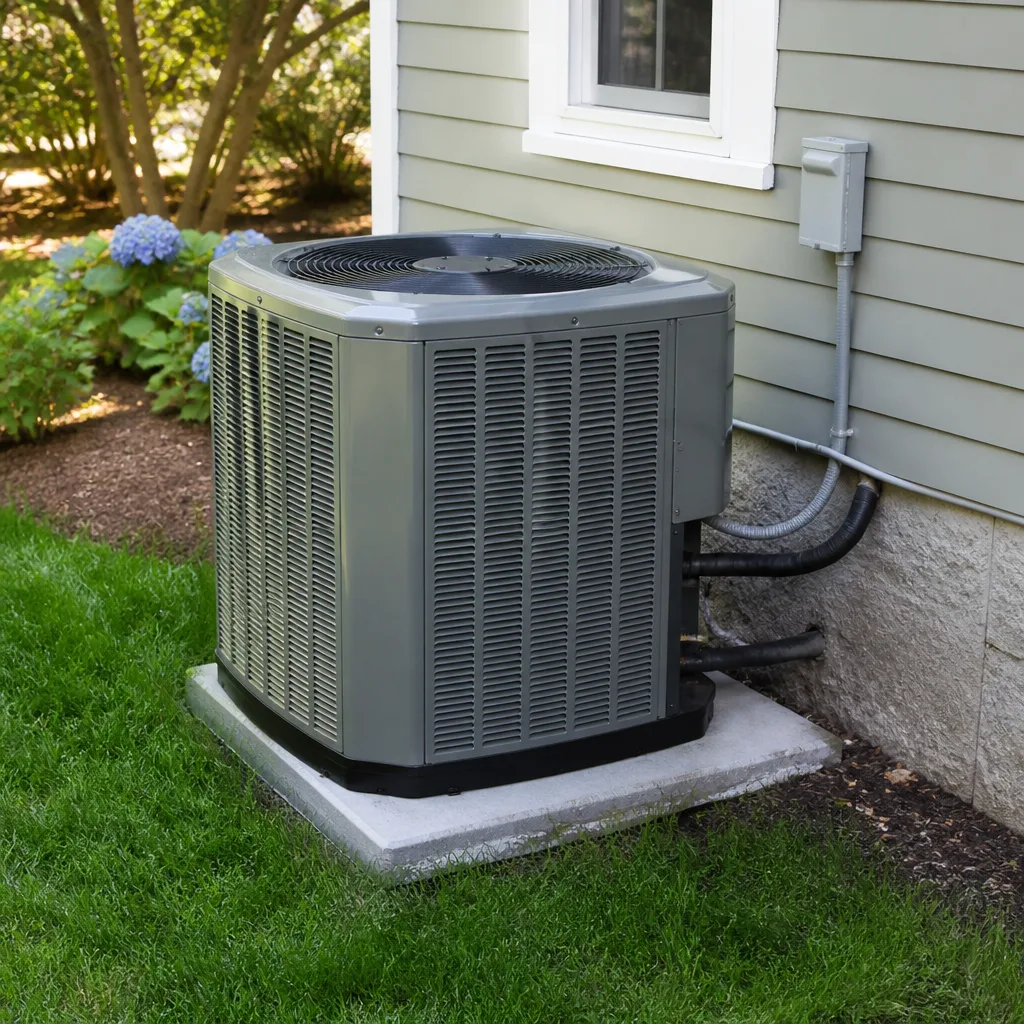 AC repair
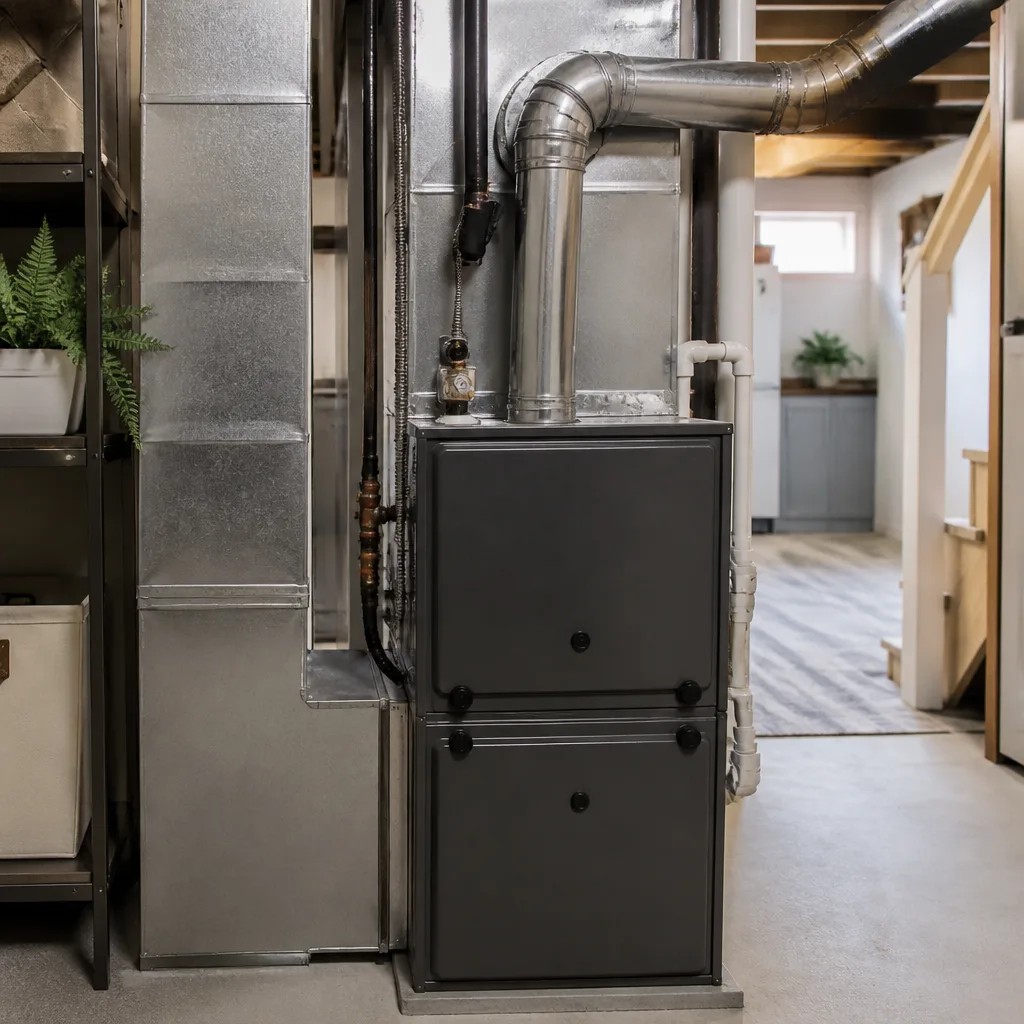 Furnace & heating
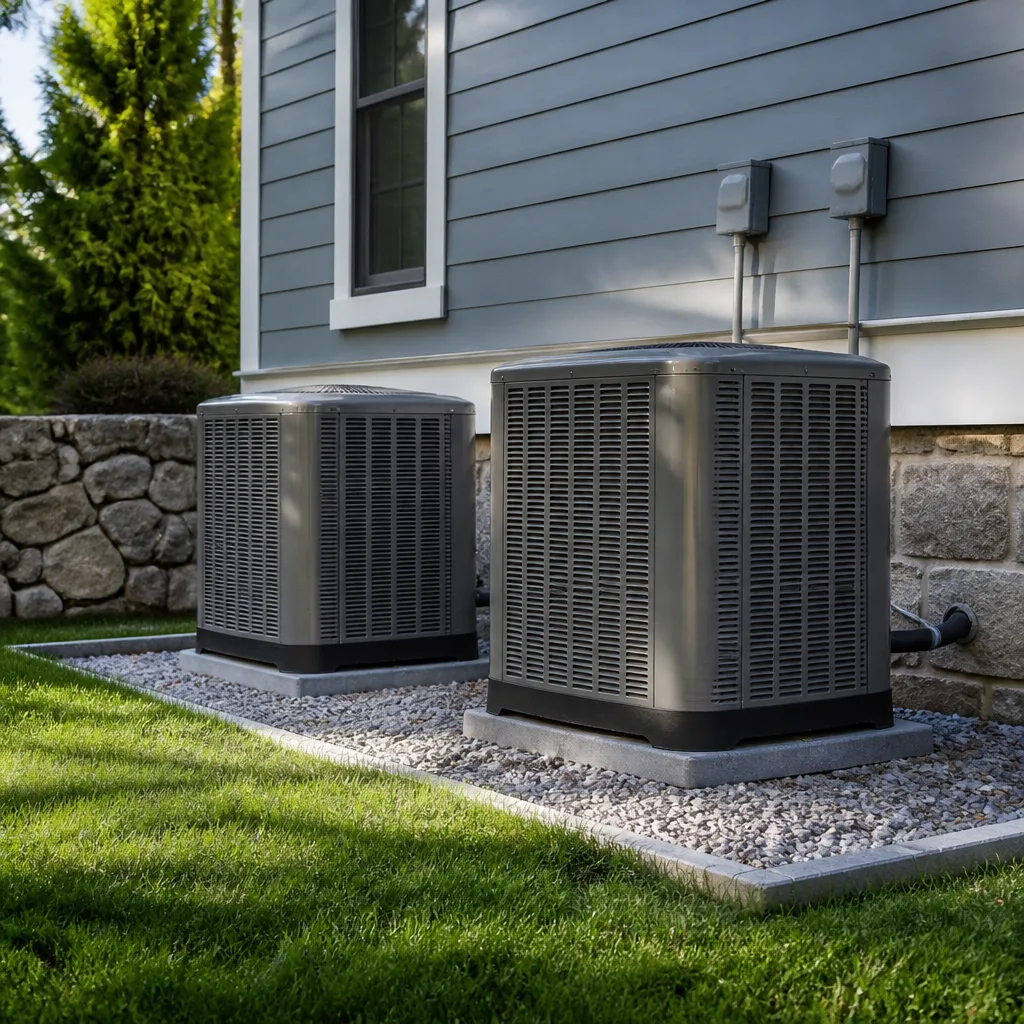 Heat pumps
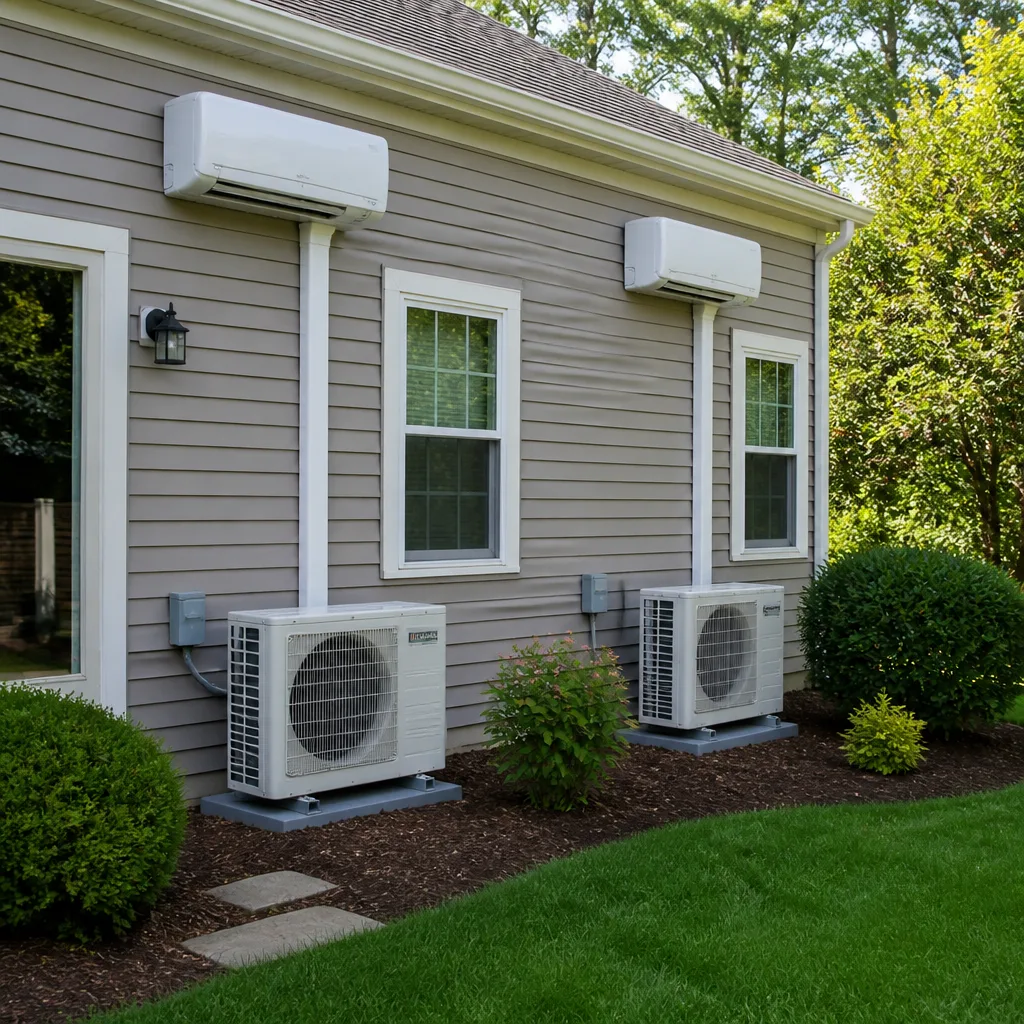 Ductless mini splits
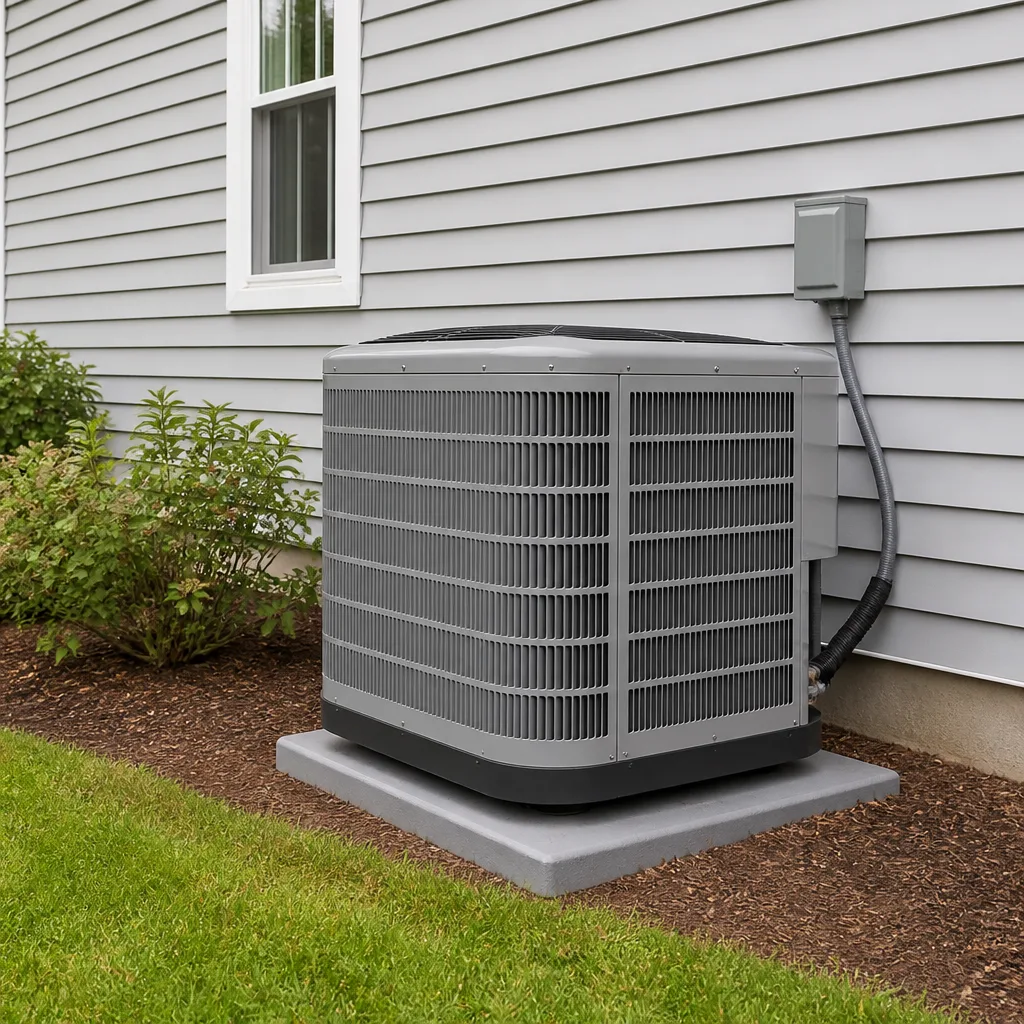 Carrier
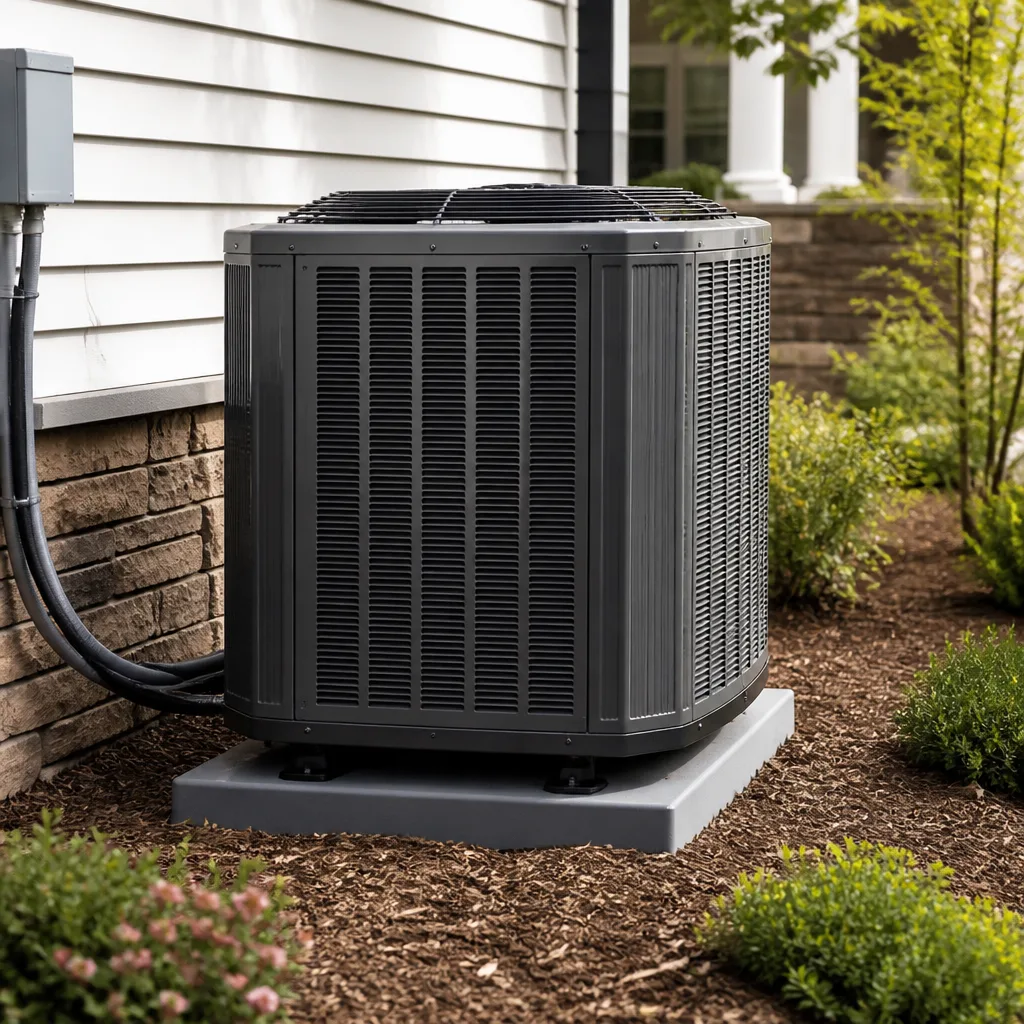 Trane
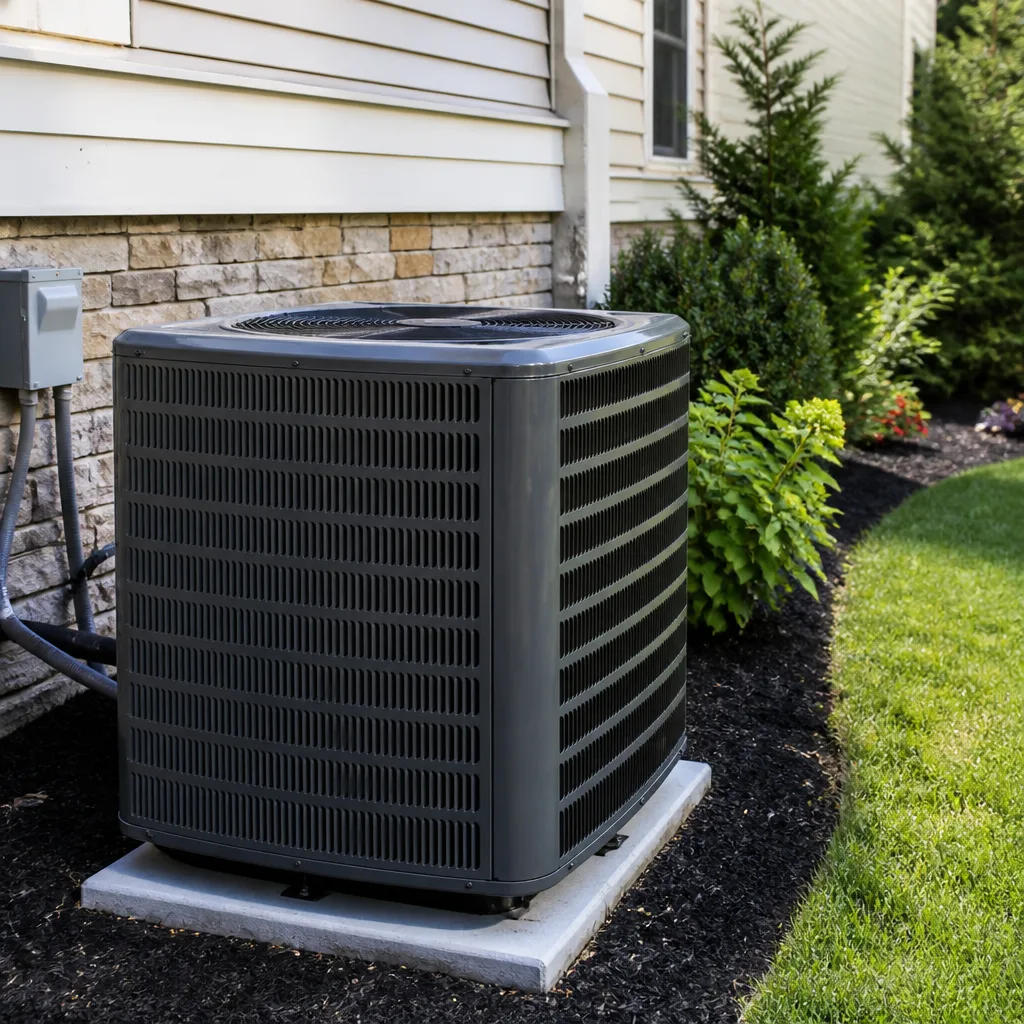 Goodman
Seasonal tune-up and full diagnostic on your Carrier, Trane, or Goodman system - readings shown to you before any repair is proposed
Diagnosis first, numbers second - you approve the repair price before a single part goes in.
Get your free estimateThe Complete AC Repair Guide for Pompano Beach Homeowners
Most AC repair advice you’ll find online was written somewhere with four real seasons and a furnace that sits idle half the year. That advice quietly falls apart in Pompano Beach. Here, a home’s cooling system runs roughly ten to eleven months of the year, often near-continuous, and that duty cycle changes everything: which parts fail first, how early they fail, and whether a repair still makes financial sense. You’ll finish this guide knowing what actually breaks in Pompano Beach homes, which fixes you can safely do yourself, how to verify a technician before they touch your refrigerant, and how to make the repair-or-replace call with real numbers instead of a national rule of thumb that undershoots here.
Quick Answer
AC repair in Pompano Beach addresses the failures a near-continuous cooling season produces fastest: dirty and corroded coils, pitted electrical contacts, refrigerant leaks, and clogged condensate drains. The right first step is a professional diagnosis of the actual fault, not a guess based on symptoms. Most repairs are straightforward for any technician certified on your equipment brand, and the honest repair-versus-replace decision hinges on system age and cumulative repair cost rather than a flat national percentage rule.
Styles & brands we work with
- AC repair
- Furnace & heating
- Heat pumps
- Ductless mini splits
- Carrier
- Trane
- Goodman
Table of Contents
- Why AC Repair in Pompano Beach Isn’t Like Repair Anywhere Else
- What Actually Breaks in Pompano Beach Systems
- The Pompano Beach Repair-or-Replace Threshold
- Which AC Repairs Are Safe to Do Yourself
- How to Verify a Technician Before They Touch Your System
- Broward County Seasonal Demand and Scheduling
- Multi-Brand Knowledge and Your Existing System
- What a Real Diagnosis Looks Like
Why AC Repair in Pompano Beach Isn’t Like Repair Anywhere Else
The single fact that reshapes everything about AC repair in Pompano Beach is runtime. A cooling system here may log thousands of hours a year, while the same equipment in a northern or even a mid-Atlantic city runs a fraction of that. Every mechanical and electrical component has an expected service life measured in operating hours, so a unit that runs year-round reaches those hours far sooner in calendar years. That’s why a Pompano Beach system can look young on paper and still be genuinely worn.
Humidity compounds it. High moisture in the air means the evaporator coil is wet for most of its working life, and a wet coil attracts dust and biological growth that a dry coil doesn’t. Electrical contacts face more cycling. Condensate drains carry far more water and clog sooner. The schedule for filters, drain flushing, and coil cleaning that might be optional elsewhere becomes baseline upkeep in Pompano Beach homes.
Here’s the practical takeaway: calendar age tells you less than condition and hours. A six-year-old system that has run nearly nonstop under high humidity is not the same asset as a six-year-old system in a mild climate, and it shouldn’t be judged by the same benchmarks. When we assess a failing unit in Pompano Beach, we weight runtime and condition at least as heavily as the date on the data plate. That’s the difference between an honest repair recommendation and a generic one.
What Actually Breaks in Pompano Beach Systems
The failure list in this climate is fairly predictable. Knowing what leads the list helps you recognize warning signs early and understand what a technician is checking.
- Dirty and fouled evaporator coils. Constant moisture plus constant airflow means coils collect buildup quickly, which cuts cooling capacity and makes the compressor work harder.
- Pitted or burnt electrical contacts. High cycle counts wear contactors, relays, and capacitor connections. Weak connections lead to overheating and premature component failure.
- Refrigerant leaks at joints and fittings. Vibration over long runtimes stresses braze joints and flare fittings. A slow leak shows up as gradually declining cooling rather than a sudden stop.
- Clogged condensate drains. More run time means more condensate. A blocked drain triggers a float switch or, worse, water where it shouldn’t be.
- Worn capacitors and aging compressors. Start and run capacitors are among the most common failure points on a hardworking system, and a strained compressor is the most expensive outcome of ignoring the others.
The warning signs track those failures: cooling that no longer keeps up on the hottest afternoons, an outdoor unit that runs constantly without satisfying the thermostat, water near the air handler, a musty smell, or a system that trips its breaker. Catching a worn contactor or a weak capacitor early is a minor repair. Letting either drag the compressor down is a replacement-level event. In our experience across Pompano Beach homes, the systems that last are the ones where small failures get addressed before they cascade.
The Pompano Beach Repair-or-Replace Threshold
The national “50% rule” says that once a repair costs more than half the price of a new system, you should replace. In Pompano Beach, that rule tends to undershoot because it was calibrated for equipment running a normal seasonal load. A system here that’s over eight years old and running near-continuous cycles has already delivered the wear of a much older unit elsewhere. So a repair that seems clearly “worth it” by the 50% math can actually be throwing money at a system already near the end of its working life.
Instead of a flat percentage, weigh these factors together:
- Age plus runtime. Consider an eight-year-old unit in Pompano Beach more like a twelve- to fifteen-year-old unit in a temperate market.
- Repair frequency. One big repair on an otherwise healthy system is different from a third repair in two years. Repeat failures signal a system on its way out.
- Type of failure. A compressor or coil failure on an older system usually points toward replacement. A capacitor, contactor, or drain issue on an otherwise sound unit points toward repair.
- Efficiency and operating cost. An aging, less efficient system that runs nearly year-round costs more to operate every month you keep it.
- Refrigerant type. Older refrigerants can be harder and costlier to source, which can tip a borderline call toward replacement.
The honest answer is that there’s no formula that replaces looking at the actual equipment. That’s the principle behind “repair or replace – we’ll tell you which one actually makes sense.” A straight diagnosis of your specific system, not a rule applied from a poster, is what should drive the decision. It’s also why an independent technician with no brand quota is worth having: the recommendation comes from what’s in front of them, not from what a manufacturer wants sold.
Which AC Repairs Are Safe to Do Yourself
Some upkeep is genuinely homeowner territory, and doing it well extends your system’s life. Other work carries real risk to you, to the equipment, and to your manufacturer warranty. Draw the line clearly.
Safe for most homeowners:
- Filter changes. The highest-value task you own. In Pompano Beach’s dusty, high-runtime environment, check monthly and change when loaded. This alone protects airflow and coil health.
- Breaker reset. If the outdoor unit won’t start and you’ve confirmed the thermostat is set correctly, checking and resetting the dedicated breaker is reasonable. If it trips again, stop and call a technician.
- Condensate drain flush. Flushing the drain line per the manufacturer’s guidance helps prevent clogs. If water is already backing up or the float switch has tripped, get it looked at.
Not homeowner territory:
- Anything involving refrigerant. Handling refrigerant requires specific certification and equipment. Attempting it is a legal problem, not just a safety one.
- Electrical component replacement. Capacitors and contactors hold a charge and can shock even when power is off. This is trained-technician work.
- Coil, compressor, or control board work. These require proper diagnostics, and a wrong move can void your manufacturer warranty and create liability.
Here’s the caution worth stating plainly: the electrical side of an air conditioner stores dangerous energy, and refrigerant work is regulated for good reason. A filter and a drain flush are fine. Capacitors, wiring, and refrigerant are not, and a technician’s training exists precisely because those tasks can hurt someone who guesses.
How to Verify a Technician Before They Touch Your System
Before anyone works on your refrigerant circuit, you have two things worth confirming: that the company holds a valid Florida HVAC contractor license, and that the individual handling refrigerant holds EPA Section 608 certification. Both are legal requirements, and both are easy to ask about. A legitimate technician will answer without hesitation.
Here’s how to check:
- Ask for the license. Request the company’s Florida HVAC contractor license information and verify it through the state’s licensing database. A contractor who can’t produce it isn’t one you want.
- Ask about EPA 608 certification. Refrigerant handling requires this certification. A company that works on refrigerant should confirm its technicians hold it.
- Ask which brands they’re certified to service. Multi-brand certification matters when your system is a Carrier, a Daikin, or an American Standard – you want someone trained on your equipment, not someone learning on it.
- Ask for insurance confirmation. A licensed, insured contractor protects you if something goes wrong on the job.
Why it legally matters: refrigerant handling is regulated, and unlicensed work can put you at risk and complicate any warranty claim down the road. A technician certified on multiple brands – say a Carrier system one visit and a Daikin the next – is working from training and experience, not a script. When you’re vetting anyone for AC repair in Pompano Beach, a few direct questions before the work starts protect you far better than a low quote does. Call (844) 952-3433 for a free estimate. We answer 24/7. Fast dispatch from 7am to 7pm, Sunday through Friday.
Broward County Seasonal Demand and Scheduling
Because the cooling season in Broward County runs almost the entire year, demand for AC repair doesn’t follow the sharp summer spike you’d see up north. But there are still rhythms. The hottest, most humid stretches push the most systems over the edge, and those are the weeks when scheduling tightens. Recognizing those rhythms lets you plan ahead instead of waiting in a queue when your system fails.
A few practical points about demand and scheduling in Pompano Beach:
- Peak heat means peak demand. During the hottest stretches, more systems fail at once. Getting on the schedule early in an issue – when cooling first starts lagging – beats waiting until a unit stops entirely, typically with a shorter trip to resolution.
- Off-peak is for preventive care. The quieter stretches are the smart time for coil cleaning, drain service, and a check of electrical components, before the busy season exposes weaknesses.
- Price doesn’t spike with urgency. The estimate is per job and set by a written estimate. The job itself, not the hour it’s scheduled, determines the price.
- Plan installs with lead time. A new system install is load-calculated and scheduled. Starting that conversation before a failure gives you room to choose equipment and a set install date.
Seasonal demand affects wait time more than anything else. That’s why we answer 24/7 – a call outside dispatch hours is booked into the next opening, Sunday through Friday, 7am to 7pm. Fast dispatch gets a technician out, and the written estimate you receive set the final price.
Multi-Brand Knowledge and Your Existing System
Most homeowners don’t choose their AC brand – it came with the house, or it was installed by whoever the previous owner hired. That’s exactly why a technician who works across brands matters more than a brand-exclusive dealer. A single-brand dealer will tend to recommend the brand they sell, because that’s their inventory and their quota. An independent, non-franchise technician recommends based on the system in front of them.
Being certified to service nine of the industry’s leading brands – Carrier, Trane, Lennox, Goodman, Rheem, York, Daikin, Bryant, and American Standard – means the technician works on what’s already in your home. If your system is a Daikin, a Carrier, or an American Standard, you’re dealing with someone trained on your equipment rather than someone who only knows one product line. We work on the system you have, and that focus on the actual equipment is what lets a straight diagnosis replace a sales pitch.
This also matters when your needs change. Because we handle both repair and replacement – and heating as well as cooling – you’re not hunting for a second contractor if the honest answer turns out to be a new system. If you’re facing that decision, see our page on AC installation for how the process and pricing work, and if you’re ready for service, our AC repair page lays out what a visit involves.
What a Real Diagnosis Looks Like
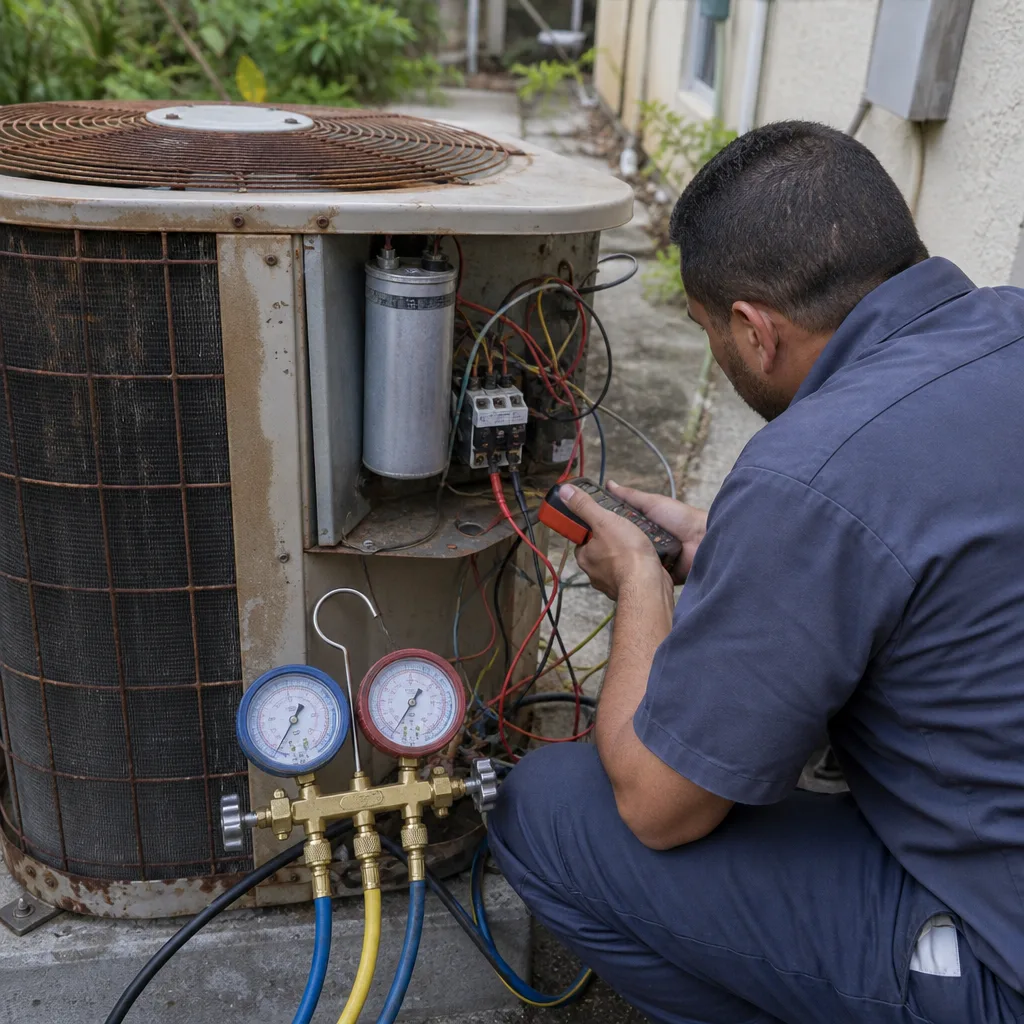
A proper AC diagnosis isn’t a guess from the symptoms – it’s a sequence that isolates the actual fault. Knowing what to expect helps you judge whether a technician is doing real diagnostic work or just selling. Here’s the general flow of a competent visit:
- Confirm the symptom and check the basics. Thermostat settings, breaker, filter, and airflow first, because those catch the cheapest failures.
- Measure operating pressures and temperatures. This reveals refrigerant charge and airflow balance and separates a charge issue from a coil or compressor problem.
- Inspect electrical components. Capacitors, contactors, and connections get checked for wear, which is where long runtimes show up first.
- Check the condensate system. Drains and float switches are verified, since clogs are common under near-continuous operation.
- Explain findings and give a written estimate. You should hear what’s wrong, what’s not wrong, and what it costs to fix – in writing, before any work begins.
The estimate is free and the price is set per job. A technician with real diagnostic skill tells you the difference between a repair that resolves the problem and one that delays a replacement. For residents of neighborhoods like Cypress Bend or the areas around Pompano Beach’s coastline, and across all of Pompano Beach, that standard of straight diagnosis, no pressure is what a good HVAC relationship is built on.
Common Mistakes to Avoid
- Skipping filter changes in high-runtime conditions. A filter that’s fine for a month in a mild climate loads fast here. Check monthly, because restricted airflow is the quiet cause of many bigger failures.
- Ignoring a slow cooling decline. A system that gradually stops keeping up usually has a refrigerant leak or a fouled coil. Waiting for a total failure costs more than catching it early.
- Applying the national 50% rule to an old, hardworking unit. Remodeling an eight-year-old system as if it were young leads to throwing money at a unit near retirement. Weigh age, runtime, and repair frequency together.
- Letting an uncertified person touch refrigerant. This is a legal and warranty risk, not just a quality one. Verify the Florida HVAC license and EPA 608 certification first.
- Resetting a tripping breaker repeatedly. A breaker that trips again is telling you something is wrong. Resetting and moving on can let electrical damage progress.
- Choosing a brand-locked dealer. A single-brand salesman recommends what they sell. For an existing system, you want someone trained across brands who works on what you already have.
- Waiting for peak heat to schedule non-emergency work. Coil cleaning and electrical checks done in the quieter stretches cost you less wait time than scrambling during a busy spell.
See the difference
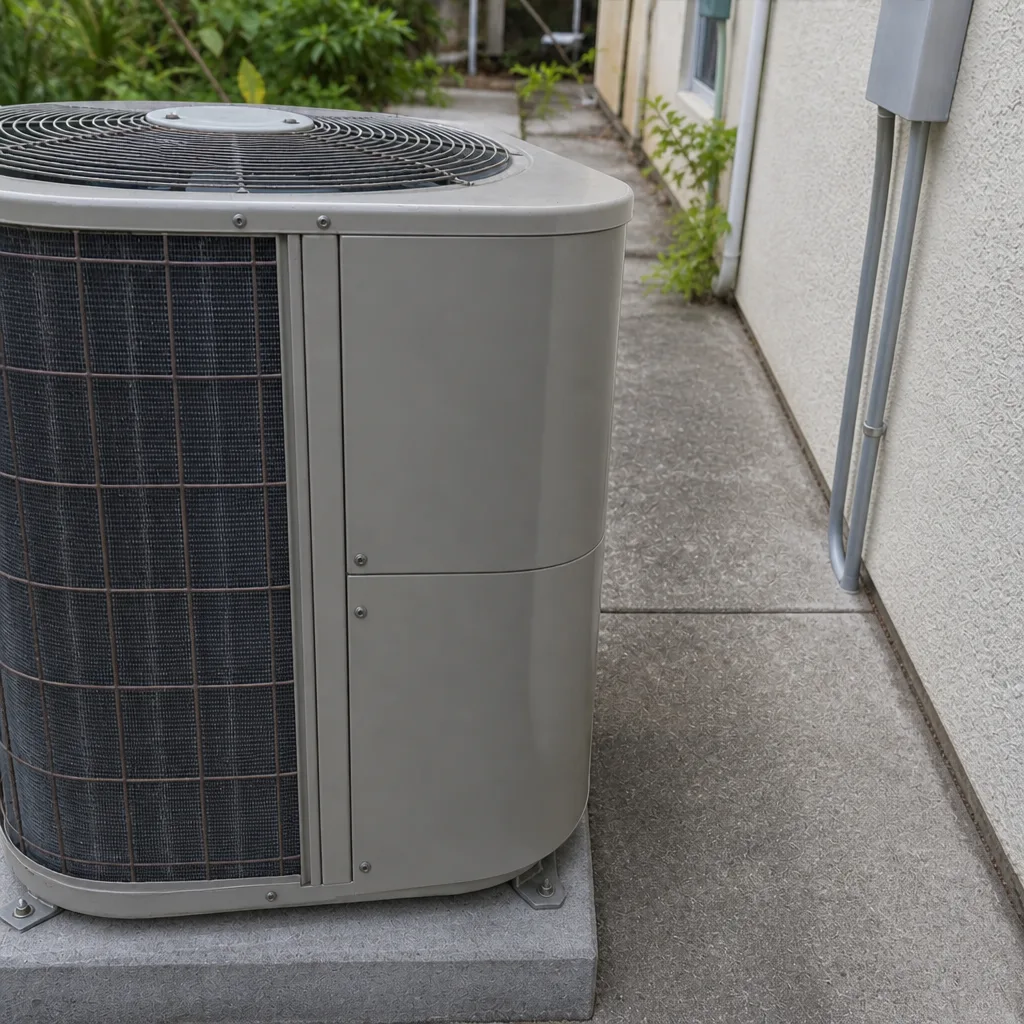
 Before
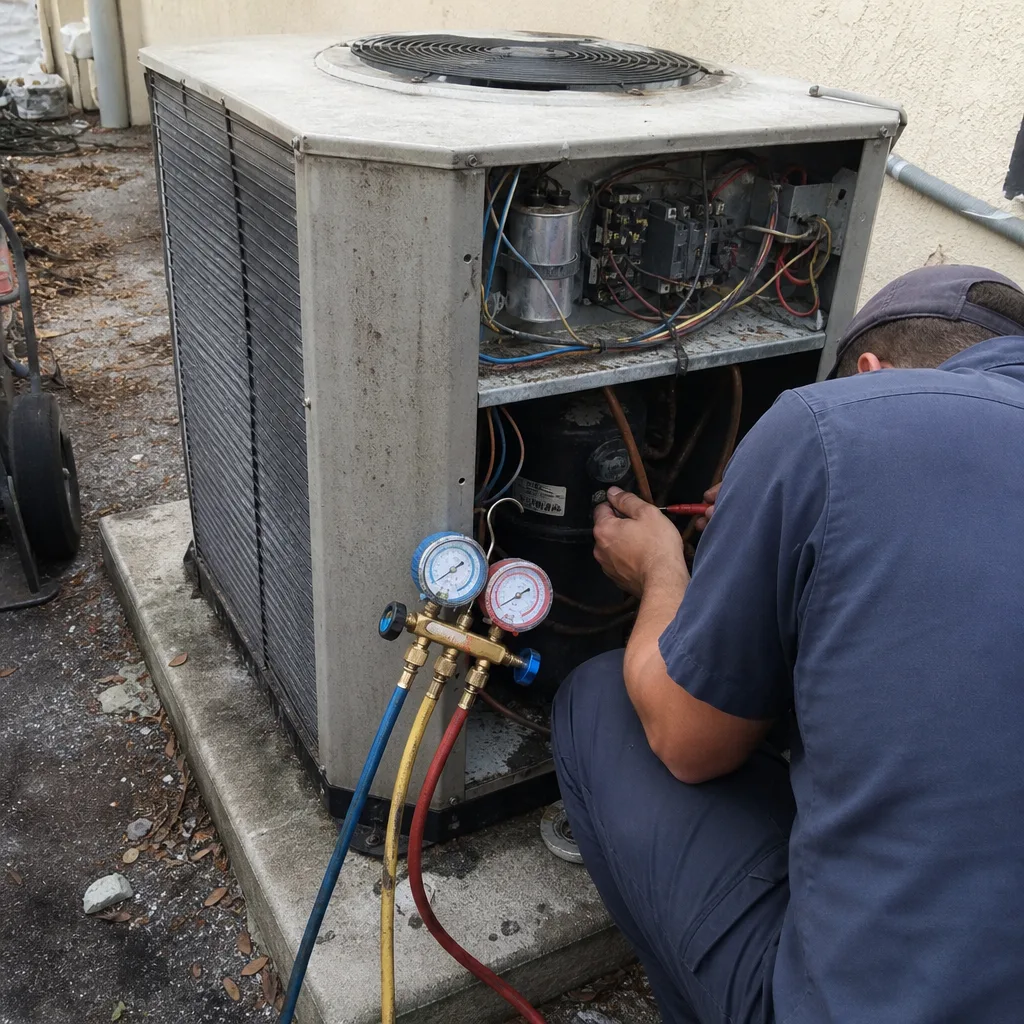
 After
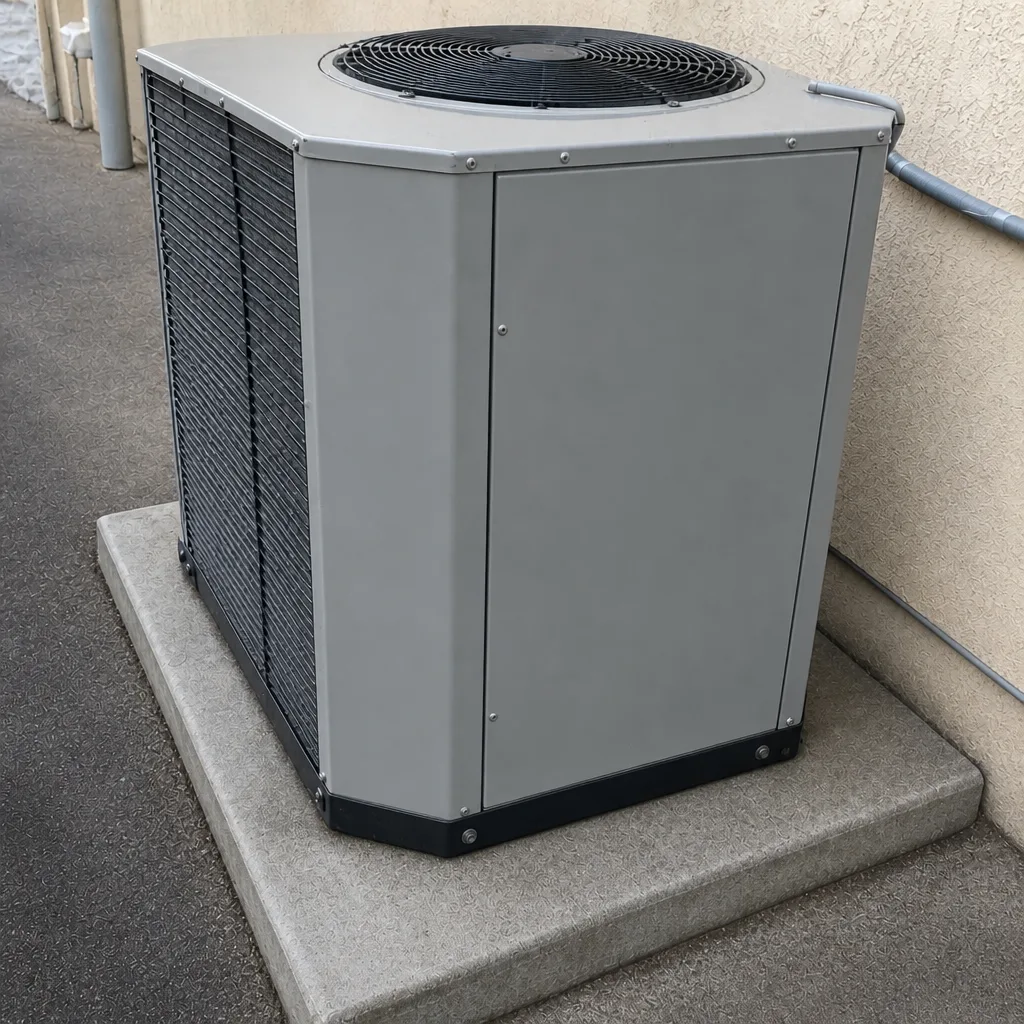
 Before
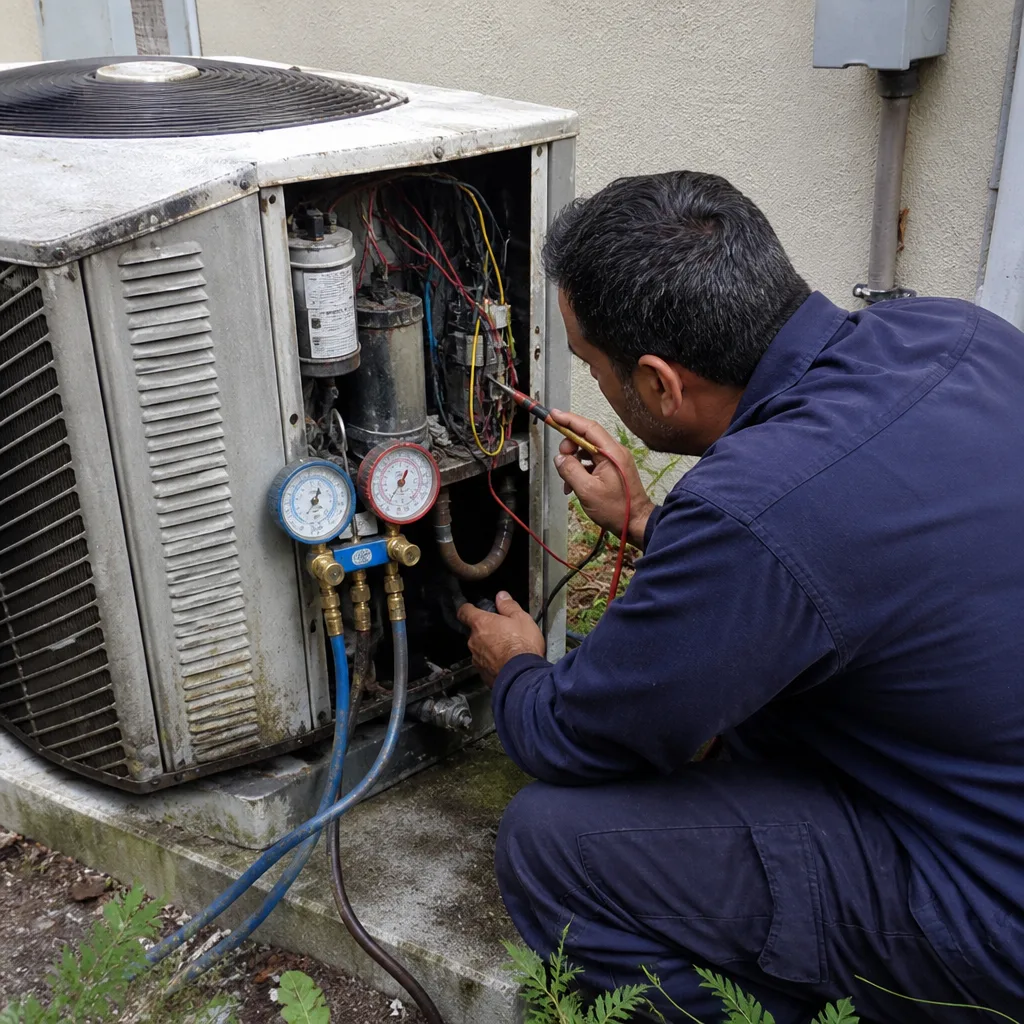
 After
 Before
 After
When to Call a Professional
Some issues clearly warrant a professional visit. Call us when your system won’t cool below the thermostat setting, when a breaker trips more than once, when you see water or hear unusual noise from the air handler, or when cooling declines gradually over a few weeks. Call before attempting anything beyond a filter change or a single, clean breaker reset – refrigerant, electrical components, and compressor work all require a trained technician, and getting them right the first time protects both your safety and your warranty.
Valor AC Repair offers free estimates in Pompano Beach – call (844) 952-3433. We work on the system you have, across nine major brands, and we’ll tell you plainly whether repair or replacement is the right call. Our technicians have up to 8 years of experience, and we show up, we fix it, we stand behind it.
Frequently Asked Questions
The price is set per job by a written estimate, and your estimate is free. Repair costs depend on the specific fault – a filter, drain, or electrical component fix is very different from a compressor or coil issue. Call (844) 952-3433 for an exact quote – estimates are free, and we answer 24/7 with fast dispatch from 7am to 7pm, Sunday through Friday.
It depends on age, runtime, repair frequency, and the type of failure – not a flat national percentage rule. A system over eight years old running near-continuous cycles in this climate has already done the wear of an older unit elsewhere, so the usual 50% benchmark tends to undershoot. We’ll give you a straight diagnosis and tell you which option actually makes sense for your system.
Same-day service is often possible depending on scheduling and demand. Call (844) 952-3433. We answer 24/7. Fast dispatch from 7am to 7pm, Sunday through Friday – a call outside dispatch hours is booked into the next opening.
We’re certified to service nine leading brands, including Carrier, Daikin, and American Standard among others. That means we work on the system you already have rather than only the brands we sell. Call (844) 952-3433 to confirm your equipment.
Check the filter, thermostat settings, and the breaker. Those catch the simplest problems – a loaded filter or a tripped breaker can mimic a costly failure. If the breaker trips again, or cooling is still poor, it’s time to call a technician. Call (844) 952-3433 for a free estimate.
Ask for the company’s Florida HVAC contractor license and confirm the technician holds EPA Section 608 certification for refrigerant work. Both are legal requirements and easy to confirm. A multi-brand, independent company with no sales quota is the right fit for a system you already own.
The Bottom Line
Pompano Beach’s near-year-round cooling season rewrites the usual rules of AC repair. Runtime, not calendar age, drives wear; humidity accelerates coil and drain problems; and the national repair-or-replace rule undershoots for older, hardworking systems. The path through it is straightforward: change filters, flush drains, watch for slow cooling decline, and leave refrigerant and electrical work to a licensed, EPA-certified technician. When something fails, verify the license and certification, insist on a written estimate before work begins, and favor an independent, multi-brand technician who works on the system you already own. That’s how repair decisions stay honest and systems last.
Valor AC Repair handles AC repair and installation across nine major brands, with heating covered by the same team. Call (844) 952-3433 for a free estimate. We answer 24/7. Fast dispatch from 7am to 7pm, Sunday through Friday.
Written by the team at Valor AC Repair.